
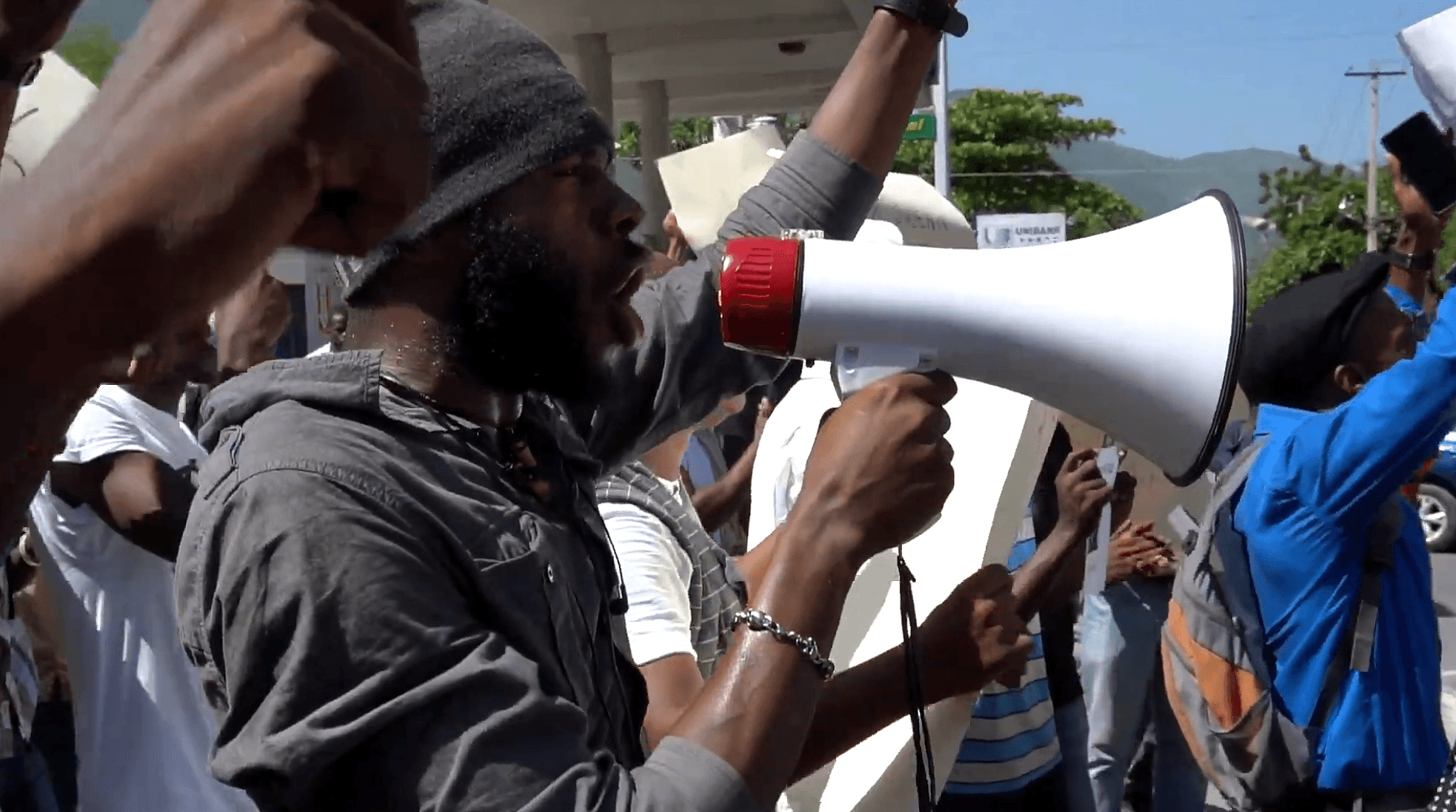

This piece was originally published in collaboration with the Abolition Journal
The minimum is connecting; it doesn’t take many resources to come together, discuss, and share our ideas.
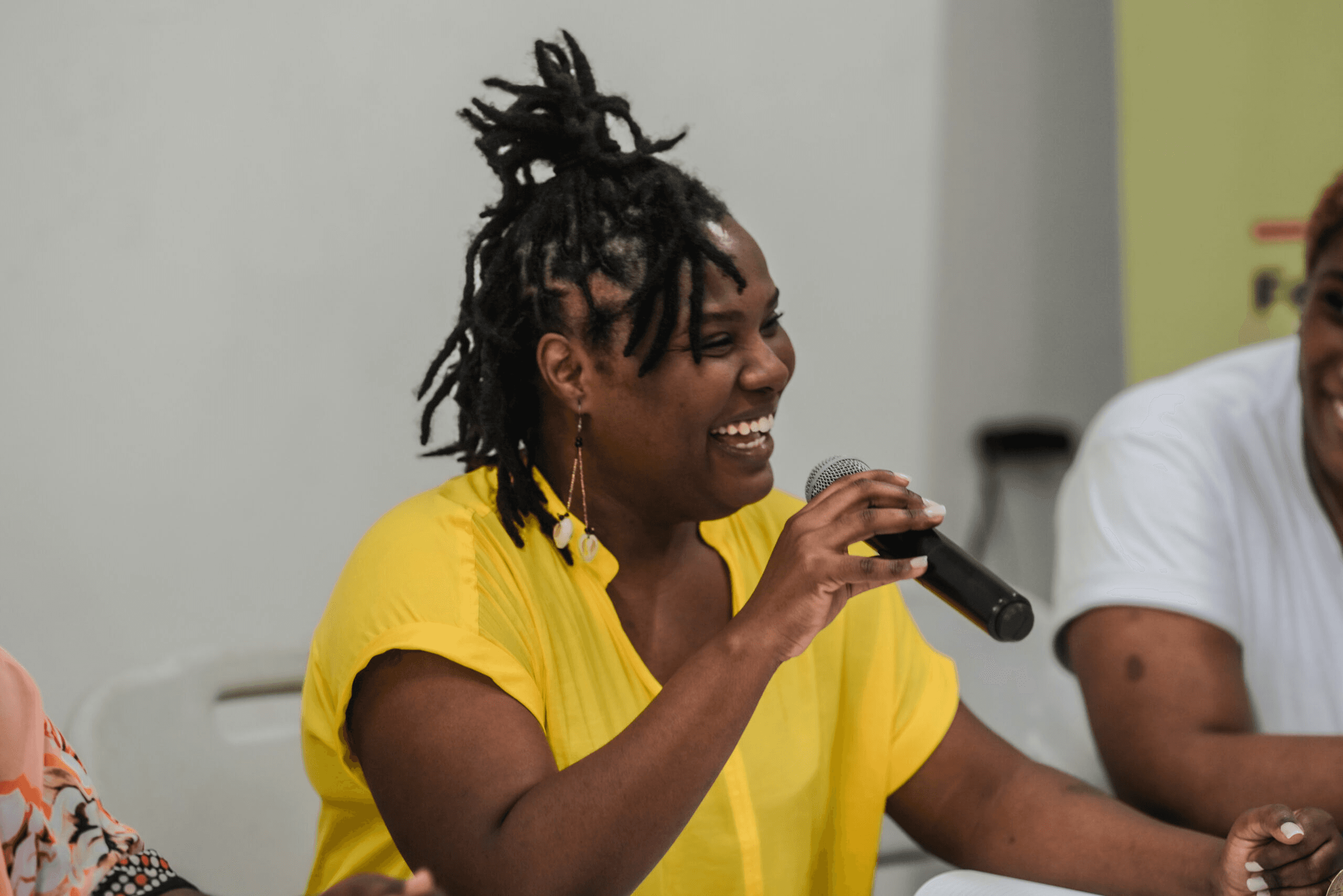
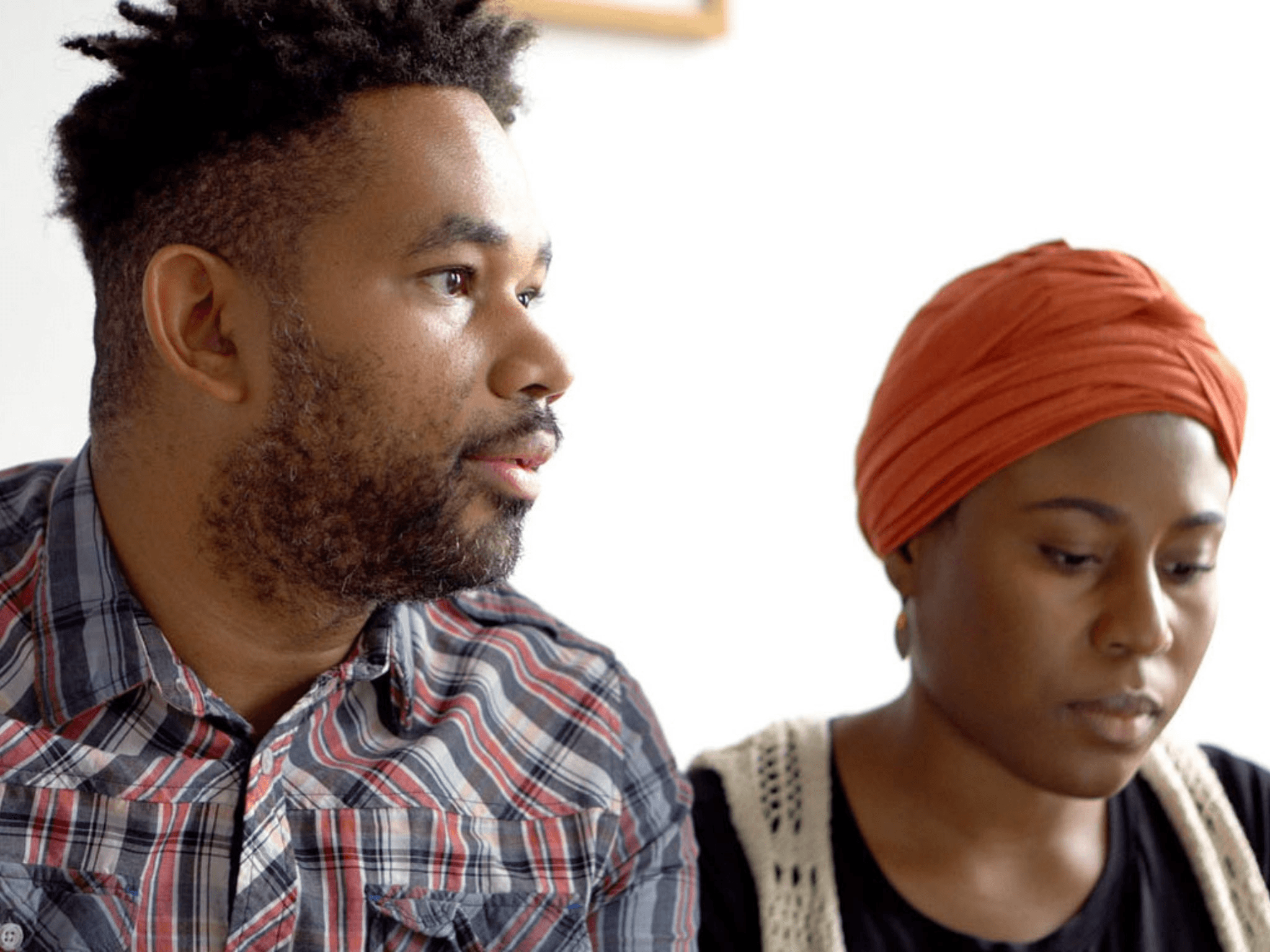
Philly and Port-au-Prince, my two homes, have seen the rise and fall of major political mobilization in the last few years. I often ask myself whether we’ve taken the time to learn all the lessons these moments and movements have to teach us. In May of 2025, I had a chat with James Beltis. He is an organizer who has been at the forefront of some of the social movements in Haiti over the last few years, including the Petro Caribe movement. He has a great way of breaking down what’s happening and helping us focus on what’s essential.
Talie: James, I wanted to have this talk with you so we can connect and reflect on the movements we’ve been witnessing or participating in, both in Haiti and Philadelphia. The theme for this issue is “everyday shit,” and I’m thinking, in the context of this discussion, what are the mundane, daily things in our lives that can build solidarity and revolution? And what do those things mean for us who are in two different places (me in Philly, and you in Haiti) that have seen a significant amount of revolutionary action in the last few years, but have both arrived at a wall of sorts? I think movements in both places have hit a wall.
James: That’s clear.
Talie: First, I want to ask you how you are doing.
James: Well, as any Haitian living in Haiti right now, I’m not doing great, given the situation of violence in Haiti that seems both out of control and yet controlled by an invisible hand, at the same time. We are experiencing this violence directly right now. It has created a real crisis of perspective, forcing you to plan only in the short term. Because you don’t know what the reality will be tomorrow, you don’t know which neighborhood will be under siege tomorrow.
Talie: I talk to my friends and family in Haiti every day to check in on how they’re doing and how they’re living. When you’re not in the situation and just receiving updates from people, you have to sort of visualize it in your mind. I continue to fail to imagine how anybody is managing to create a sense of normalcy in the context of insecurity. Yet, that’s exactly what everyone in Port-au-Prince is doing.
James: Some scholars say that the biggest tragedy that the Haitian population will ever face is slavery. Now, while slavery did not happen to our generation directly, we also know that trauma is transmitted genetically. We know that things that might have happened to our great-great-great-grandparents are now coded into our DNA, even if we aren’t aware of it. So, if somewhere in our bodies we have already experienced the biggest catastrophe possible, that is slavery, we tend to “de-dramatize”—that’s not really a word, but I’m going to use it anyway—we tend to de-dramatize anything else. So it’s no surprise that when disaster strikes, countless songs and jokes come out, and the street bands take to the streets.
Talie: Because what is a crisis for people who have already experienced the most profound trauma possible?
James: Exactly, as Haitians say, “nothing surprises me.” Now, depending on your perspective, there’s another way to explain this sense of normalcy that might be a little more concerning. Haiti has a very young population. We know that 70% of the population in Haiti is younger than 30 years old. And 60% are younger than 25 years old. I think that’s a demographic reality we should take very seriously. So, what one might perceive as resilience isn’t necessarily resilience–for someone who is 23, when this crisis reared its head in 2018, you can calculate how old they would’ve been. The violence is all they know. They’ve spent their adolescence and early adulthood in full crisis; they don’t know another reality.
When I was young, I could leave Port-au-Prince at 10 PM and drive south for a visit without a worry. I knew a Haiti where I could drive out of the city at night without worrying about the risk. They don’t know that Haiti.
Talie: How familiar are you with the city of Philadelphia?
James: Not very. I know a few historical facts, but that’s it.
Talie: What I can tell you is that, of all the major cities of the United States, people often say Philadelphia is “the poorest big city” in America. It reminds me of the West’s go-to description of Haiti as “the poorest country in the Western Hemisphere.” There is a historical connection between Philly and Haiti because when the Haitian Revolution started, colonizers and free Black people who wanted to escape the fight fled, and many ended up in Philadelphia. But I, as a person who has spent my whole life between Philadelphia and Port-au-Prince, am more interested in the more abstract or spiritual connections. Philadelphia is one of those cities that really reveal the lie that is the USA because it lays bare the ways this country neglects and oppresses Black people, but simultaneously proves the power Black people have been able to create for themselves in this country.
Philadelphia also sees a lot of gang violence—the circumstances, the impact, and political context are, of course, very different. However, I think it might still similarly make us lose sight of certain things. People misguidedly find themselves calling on increased police force to protect them from violence in the streets because they are scared. As someone who’s been following the situation in Haiti and how it’s deteriorated, it’s like you said in the beginning: the violence in Haiti seems both out of control and also controlled by an invisible hand. And it makes me want to push people to dig deeper about what’s happening here, why are our young people with so few resources somehow armed?
James: What you’re saying is so interesting, because for two years now, I’ve been trying to ask questions. I was one of the leaders of the Montana Accord, but I eventually had to walk away from it. The intention was to tackle issues in new and more creative ways, but the traditional wings of this movement dragged those efforts down. One of the most unfortunate mistakes of this crisis is that so many people stood and asked the police to save us from a crisis that is ultimately geopolitical and regional. The US is a major arms manufacturer, and as these guns evolve, they become more and more like gadgets.
I find that many Haitians forget this aspect when analyzing this situation. The US has never been able to solve its gun crisis despite all the tragedy it has caused in its own country, so imagine what it’s causing outside of it, in the Global South. If the US has failed to put restrictions on guns in their home, and allowed it to operate as a random business sector, why would they restrict it here?
Talie: Yes! I always say, everything the US permits in poor American neighborhoods can offer you a reflection of what’s happening in the Global South, in countries like Haiti. If the US government doesn’t give a shit about the life of a child in West Philadelphia—
James: —then it definitely doesn’t care about a child in Lasalin.
A few years ago, it was estimated that there were 500,000 illegal guns in Haiti. I’m sure this has grown exponentially since those reports came out. The militarization of the Haitian police force alone—because the Haitian police force has essentially become a military force—is entirely equipped with American and Canadian equipment. You look at the civilian defense brigades that neighborhoods have been forced to set up to defend themselves, becoming increasingly armed. These three categories—the Haitian police, individual citizens, and the gangs—are heavily arming themselves. No matter how you look at it, it has been profitable for American arms manufacturers.
Haiti’s politicians have ignored that Haiti is becoming a bigger market for gun manufacturers in the West, and instead have supplemented this market in the name of “fighting gangs.” Instead of investigating the police force’s ties to the gangs, they have instead continued to buy more and more guns for this force. They have tried this strategy for three years with no results, until we find ourselves in a situation where everyone is now waiting for the capital to fall.
Talie: You say that this strategy automatically assumes that the police are for the people, when in reality, the police are all intertwined. We don’t even know where the police end and the gangs begin.
In Philadelphia, I would say the police have shown in significant ways that they are not here to protect Black people. Right in my neighborhood, in 1985, the Philadelphia police bombed and burned a whole block while targeting a Black liberation organization, for example. There are movements in the US calling for the abolition of the police system and for us to create new systems of protection, new ways to live, and build together. Because everything that exists today is something that was in someone’s imagination, this whole system in the US came from the imaginations of people who did not see Black people as people, but saw Black people as dangerous. None of these systems were built to serve us.
This is the same for Haiti, because the systems we are using were handed to us by the West. Many of these institutions were built during the US occupation of Haiti from 1915 to 1934. The US doesn’t just export products; I’ve come to understand that one of the US’s major exports is the Prison Industrial Complex itself. They’ve exported their whole system and shoved it down our throats, even though the founding of Haiti was a project that sought to create something new, something free.
James: This is one of the successes of the system. It has successfully hindered many people’s perspectives. It convinces you that everything here is definitive, that no other kind of world is possible. Even though in our history as Haitians, we proved that a freer world is possible, and the structures we have here are actually recent.
The way we are educated, if you are a person who simply went to school and was not intentional about entering into spaces of reflection on history and political education, creating a new world without these systems will seem impossible. We have so much we can learn from abolition movements trying to form new paths.
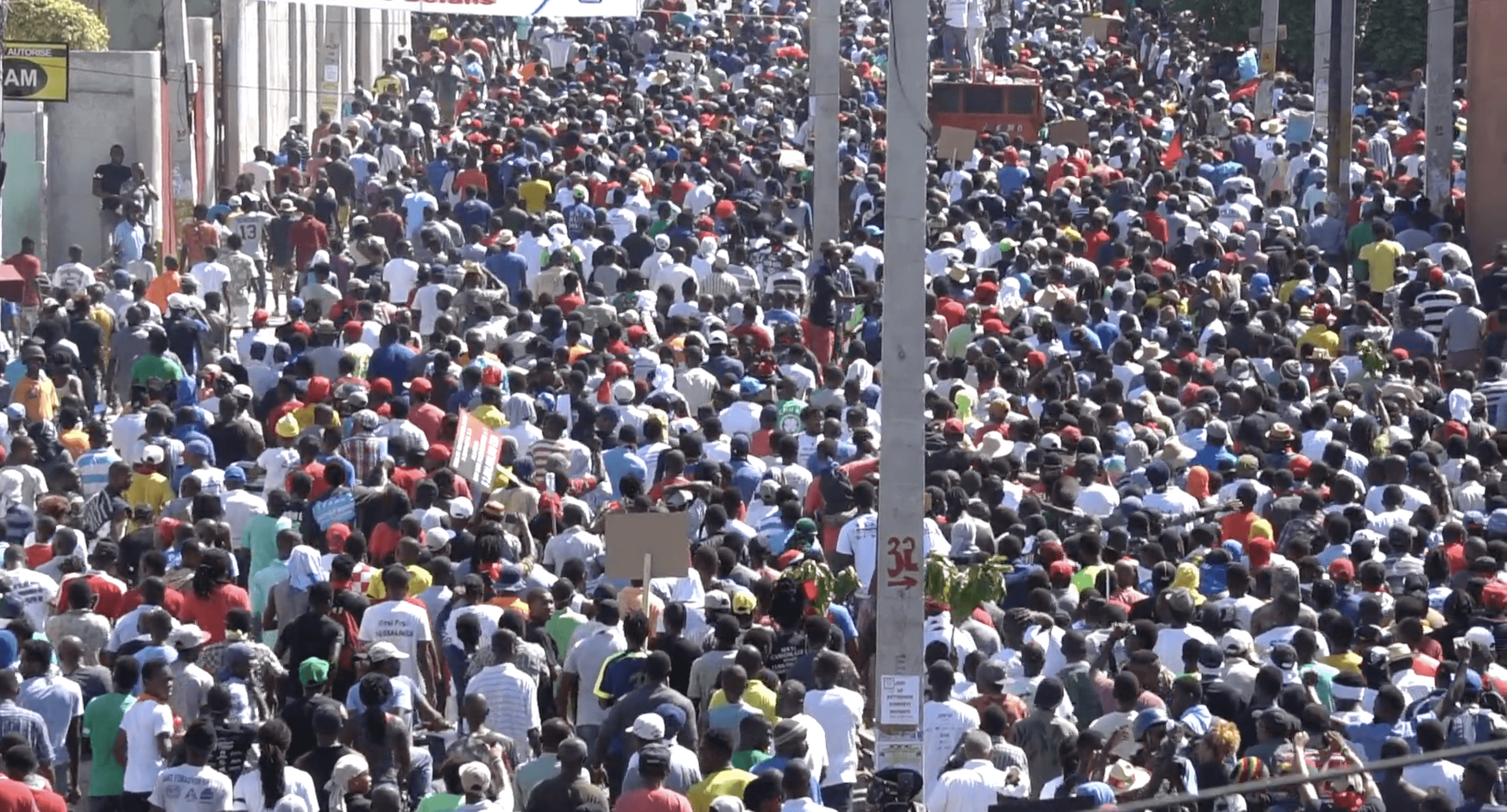
Still from the documentary, “The Fight for Haiti,” directed by Etant Dupain
Talie: Let’s compare the two, Haiti and the US.
In 2020, the US saw massive uprisings during the coronavirus pandemic against police brutality and the prison industrial complex. There was a police murder of a Black man right here in West Philadelphia. The rage was alive in the streets; businesses were burned and looted. In many ways, it’s as if the state lost its hold on the city for a period of time. And this was happening across the country. I felt a revolutionary surge that I’ve never felt before in this country. I remember telling myself in 2020 that if those in power can quell this rage that I’m feeling in the streets today and make everyone accept the status quo again, I will know that what we are up against is scarier and more powerful than I thought.
Now, here we are in 2025, and Donald Trump is president. Biden just spent the previous four years in power (after benefiting from the movement of 2020 to become elected), and I don’t think he accomplished anything regarding the 2020 protests’ demands. The police aren’t any less violent, and Black people are not any freer. So, if you were alive in 2020, you’ve essentially witnessed a massive uprising, and you’ve also witnessed the fire of a massive uprising being successfully crushed. We are watching fascism swallow all the institutions, but we feel more powerless than ever.
Haiti saw the Petro Caribe movement bring thousands to the streets, not just against corruption, but against US imperialism, against the West’s hand in Haiti’s problems. And violence was enacted on the people until marching ceased. I think both Philadelphia and Haiti are at a place where revolutionary action is urgently needed if we are going to make it out of this, but in both places, dominant powers very recently sent a critical message to the masses by successfully blocking our liberation movements in a major way.
So, what do we do now? I follow your work. You were part of the Petro Caribe movement and the Montana Accord. Both were significant movements that felt potentially promising but ultimately ended in disappointment and even tragedy. Ultimately, the powers you were up against were stronger.
James: Yes, the social movements are at an impasse. These impasses create a lot of pessimism amongst activists, and make you wonder why we continue to fight when we are constantly losing and the system continues to outmaneuver us.
I always remind my comrades that, as you pointed out, from 2018 to 2021, it was not just Haiti that saw major protests. The Dominican Republic also saw major protests against corruption, and this movement propelled Luis Abinader to the presidency—even though he is violently anti-Haitian. He rode the wave of the anticorruption movement of the Dominican Republic. Many Dominican activists felt that Abinader’s election was the completion of their movement because he seemed less corrupt than most politicians. Certain leftist groups endorsed him despite his being right-leaning. Meanwhile, in Haiti, we see what this has resulted in. Our diplomatic relations with the Dominican Republic have completely degraded, and anti-Haitianism is at an all-time high in that government.
I think about the Gilet Jaunes (Yellow Vest) protests of France, which, despite their magnitude, did not result in any measures that addressed the demands of the French people. The protesters were repressed until they gave up and went home. This is what we saw in Haiti. What makes Haiti different is that France and the US use their police to repress these social movements, whereas in Haiti, the powers that be erect paramilitary groups and empower gangs to enact violence on their neighbors.
Talie: So, how do you think Haitian and Philadelphia activists can work together, support each other, build solidarity, and learn from each other?
James: We need to communicate! Here in Haiti, even among the different regions of Haiti, the main thing the current crisis has done is separate us. It’s made organizing together extremely difficult. But even the spaces to unite, hang out, and exchange ideas have been taken from us. The more violent the crisis becomes, the less we congregate, and we lose these spaces of dialogue. But technology can help us out here. We first need to create connections and make the habit of making time to connect. I know of organizations that have open Zoom calls at a specific time every week, and it remains open for twenty-four hours, so that anyone from the various countries they organize with can simply log in and talk to each other if they have time.
The minimum is connecting; it doesn’t take many resources to come together, discuss, and share our ideas. We need to confront our disagreements and heal the connections because one of the biggest things that white supremacy has done to people in places like Haiti and Philadelphia is to separate us.

" height="102.5816409423233px" id="g2kZUfxvI" width="102.91800162469531px"/></svg>)
" height="103px" id="oG538LvCh" width="102.99817255782794px"/></svg>)
" height="103px" id="SKAc1JCfN" transform="translate(1.11 0)" width="100.78524425744274px"/></svg>)