Search
Read in kreyòl


In Solidarity
In Solidarity
In Solidarity
Haitians Struggle to Access a New Path to the U.S.

This story was produced with the support of the Round Earth Media program of the International Women’s Media Foundation in partnership with Woy Magazine.
PORT-AU-PRINCE, Haiti — Andre Samedi was briefly held at gunpoint last year after picking up his car from customs. The assailants stopped the 43-year-old in Canaan, a small town on the outskirts of Haiti’s capital of Port-au-Prince, and drove away with him. They eventually decided to let him go, but got away with the 2003 Nissan Pathfinder.
“Since then, I’ve been very scared,” says Samedi, who owns a shipping and electronic sales business. “I can’t go out often and only do so if it’s an emergency. When I do go out my heart races and I’m very stressed. The experience has left me traumatized.”
Samedi is one of tens of thousands of Haitians who applied for a new U.S. immigration program that President Joe Biden announced in early January 2023. The program, known as humanitarian parole, allows Haitians, Cubans, Venezuelans and Nicaraguans to apply to move to the U.S. for a two-year stay.
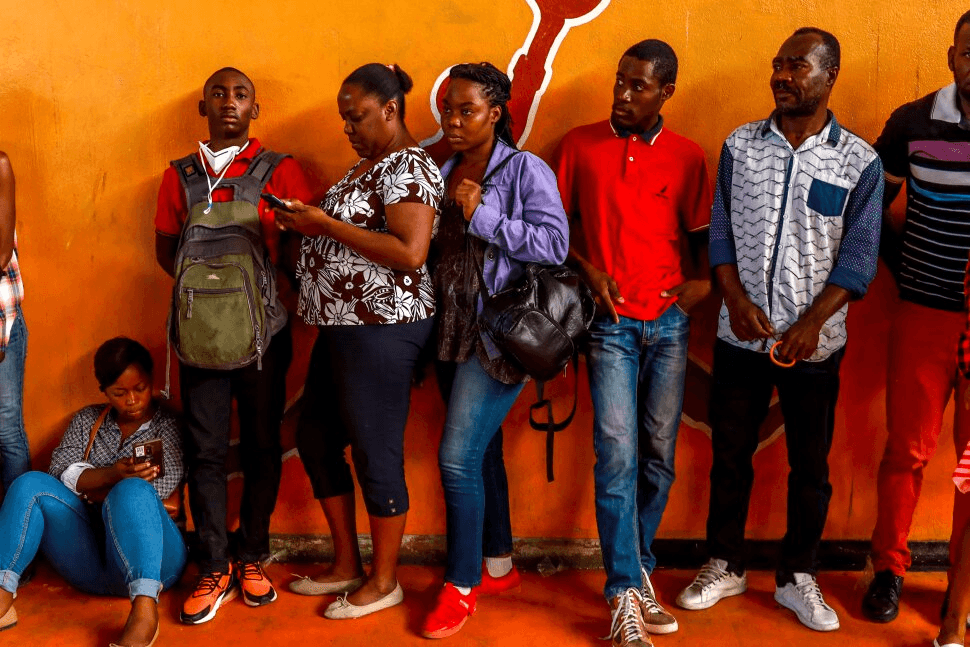
But the popular program has proved difficult to access for many Haitians, some of whom complain about language barriers, technology challenges and financial obstacles. Many say the process of acquiring mandatory documents for the program has become frustrating and at times frightening, with violence breaking out at passport centers.
Jun 29, 2023
Haitians Struggle to Access a New Path to the U.S.


This story was produced with the support of the Round Earth Media program of the International Women’s Media Foundation in partnership with Woy Magazine.
PORT-AU-PRINCE, Haiti — Andre Samedi was briefly held at gunpoint last year after picking up his car from customs. The assailants stopped the 43-year-old in Canaan, a small town on the outskirts of Haiti’s capital of Port-au-Prince, and drove away with him. They eventually decided to let him go, but got away with the 2003 Nissan Pathfinder.
“Since then, I’ve been very scared,” says Samedi, who owns a shipping and electronic sales business. “I can’t go out often and only do so if it’s an emergency. When I do go out my heart races and I’m very stressed. The experience has left me traumatized.”
Samedi is one of tens of thousands of Haitians who applied for a new U.S. immigration program that President Joe Biden announced in early January 2023. The program, known as humanitarian parole, allows Haitians, Cubans, Venezuelans and Nicaraguans to apply to move to the U.S. for a two-year stay.
But the popular program has proved difficult to access for many Haitians, some of whom complain about language barriers, technology challenges and financial obstacles. Many say the process of acquiring mandatory documents for the program has become frustrating and at times frightening, with violence breaking out at passport centers.
Jun 29, 2023
Haiti’s Battle With Cholera Returns. Here’s Why
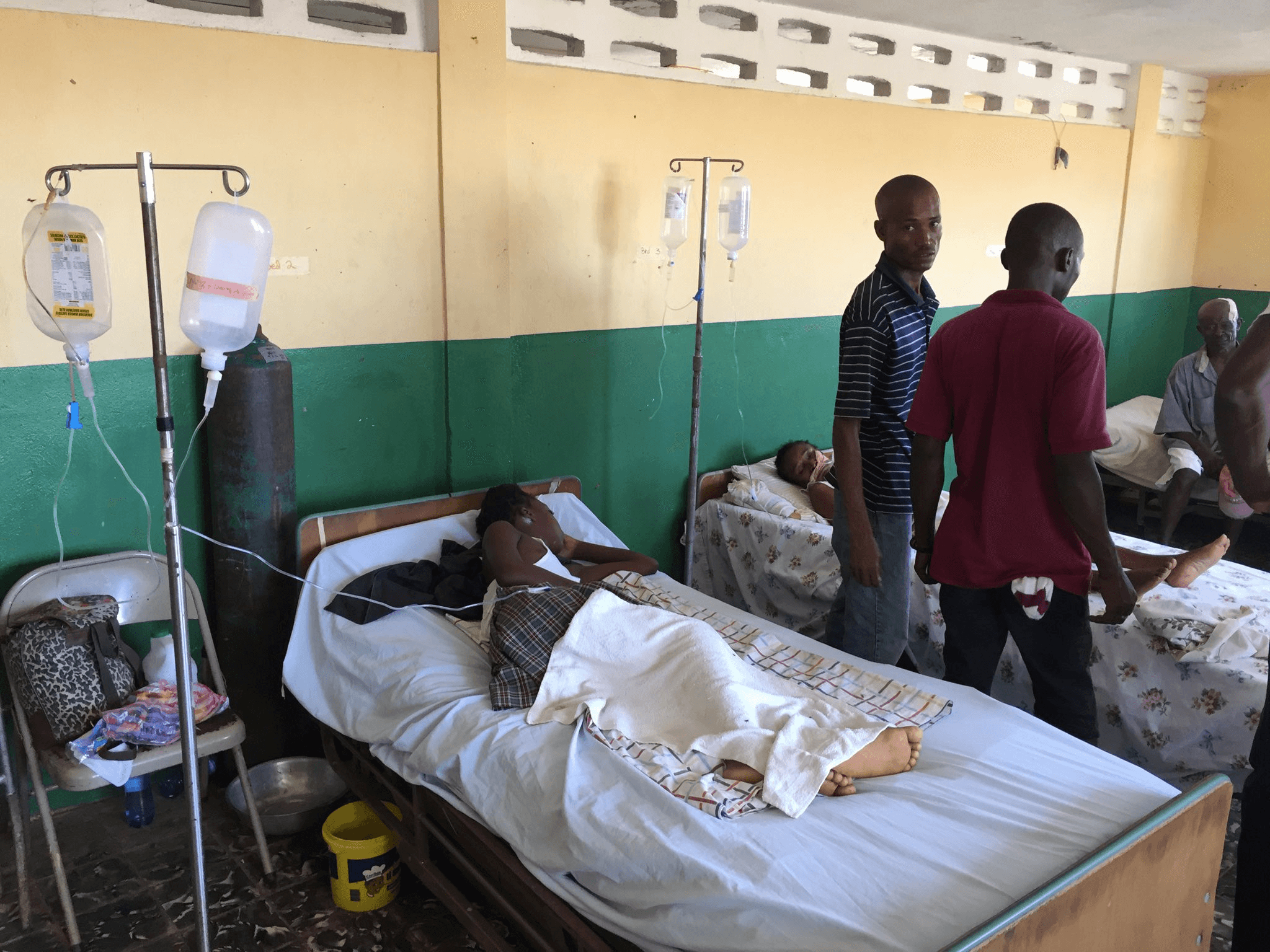

The lesson is that a public health system is never independent of the general functioning of a country—especially a surveillance system.
Photo credit: Etant Dupain
On a warm February morning earlier this year, I was thrilled to learn some fantastic news about Haiti. After years of struggle, the country had come to eliminate cholera. This diarrheic disease acquired principally by ingesting food or water contaminated with the vibrio cholerae bacteria has had a tragic impact on the island. In 2010, a few months after a deadly earthquake killed hundreds of thousands, UN peacekeeping troops stationed along the Artibonite river in central Haiti started the local epidemic. The epidemic had regional consequences as the El Tor strain the UN soldiers imported into the country from South Asia was linked to outbreaks in other countries, including the Dominican Republic, Cuba, and even Mexico.
What followed was a decade of astounding physical and psychological trauma. Nevertheless, with incredible willpower and critical partnerships with international agencies, 12 years later, the Haitian Ministry of Health closed this chapter with relative satisfaction. Hence the announcement and celebrations in February. Unfortunately, the joy of this accomplishment was short-lived. A mixture of misfortune in conjunction with an unstable political situation, major economic setbacks, and the deadly COVID-19 pandemic are likely responsible for the reversal of this significant achievement.
In October 2022, a resurgence of the cholera outbreak was reported in Haiti. There are conflicting reports about the exact number of people affected by this resurgence, but by October 19th, the Ministry of Health had confirmed 23 deaths. The most alarming outbreak is happening now in the largest prison in the country. Questions remain unanswered about why this dreaded specter has reappeared. The National Cholera Surveillance System, established by Haiti’s Ministry of Public Health with support from the CDC, is the focus of most of these interrogations. The surveillance system was and is still instrumental in the fight to eliminate cholera. Despite its efficiency at the start of the epidemic, it is hard to say whether such a system was consistently implemented in Haiti after cases went down.
Daily reporting of cholera cases through the Direction d’Epidémiologie, de Laboratoire et de Recherches (DELR) and microbiological surveillance through the Laboratoire National de Santé Publique (LNSP) allowed Haitian health officials to detect and monitor cases with great accuracy during the first ten years of the epidemic. Surveillance officers trained in Haiti working from 357 sites carried out these crucial daily reports.
From October 2010 to December 2018, the Ministry of Health recorded 820,300 suspected cases and 9,792 deaths. Afterward, cases diminished by 72% in 2018 and 82% in 2019. By August 2020, the decision-makers perceived the decreased incidence of cholera as a victory. However, researchers noted that the underperformance of the passive surveillance system allowed an increased number of cases to go under-reported and a risk of disease resurgence, as published in a Lancet article by Jeannot Francois. Jeannot Francois was the director of the country's vaccination program (Programme Elargi de Vaccination). Environmental surveillance was not consistent from the start. It lacked funding and effective governance and mainly consisted of various dispersed projects. The Ministry of Health did not communicate any findings to the general population. Haiti’s challenging socio-political context culminating in an explosive situation following the assassination of Jovenel Moise, only worsened these already worrisome structural problems.
Political instability
For about three years before the assassination of Moise, nationwide protests were commonplace, with roadblocks as a strategic mainstay. The circulation of people and goods remains limited in cities and between departments. To make matters worse, armed groups actively control large territories in Port-au-Prince and neighboring towns threatening access to clean water and sanitation.
In 2015, only 52% of Haitians had access to essential water and sanitation facilities, according to the World Bank. I suspect that these figures are even more alarming in sensitive zones. Gun violence, blocked areas, and poor access to all basic services are characteristics of these neighborhoods where the state is absent.
Recently, the national water authorities announced that uprisings and general strikes had disrupted clean water systems. During this “lockdown,” many people resorted to drinking visibly contaminated water. Videos circulated on social media showed people drawing water from taps near the southern exit of Port-au-Prince in an unsanitary environment. Large amounts of toxigenic cholera living in the environment for years were likely being ingested weeks before the announced resurgence. In this unstable context, the Ministry of Health and its network of field epidemiologists doing active surveillance are powerless. No clinical site has been regularly functioning amid severe gang violence and essential resources blockade. Now, any epidemiological investigation can be an overwhelming risk. Therefore, no reliable data can be reported.
Economic setbacks
People in Haiti face stagnant wages, forcing them to leave the public workforce and reducing the state’s ability to maintain motivated disease surveillance teams.
Haiti has been on a path of economic regression that has worsened in the last year. Inflation has reached an unsettling 29%, according to the Institut Haïtien de Statistique et d’Informatique (IHSI). Even more dramatically, the US dollar exchange rate against the national Gourde has been the center of everyone’s attention, reminiscent of past periods of the near-collapse of the Haitian economy.
The ongoing waves of young people fleeing the country are unsurprising. People in Haiti face stagnant wages, forcing them to leave the public workforce and reducing the state’s ability to maintain motivated disease surveillance teams.
Furthermore, the Ministry of Health’s endeavors remain increasingly dependent on outside partnerships. This limits the state’s ability to set priorities on resource allocation independently. The environmental surveillance system remains unfunded while promising young scientists still have no incentive to integrate the scattered projects into a national program.
The COVID-19 pandemic
When the COVID-29 pandemic hit Haiti in March 2020… Staff and funding were moved from one epidemic to the other.
When the COVID-19 pandemic hit Haiti in March 2020, it was 13 months since the last documented case of cholera. The cholera epidemic had not yet been declared over. Complacency in cholera surveillance was rampant among decision-makers and the general population.
COVID-19 was undoubtedly a major public health threat that required a rapid response. An already weak healthcare system had to deal with two major public health threats simultaneously. Staff and funding were moved from one epidemic to the other. In an interesting article about cholera elimination in Haiti, Sophie Cousins cited Jeannot Francois, saying, “In 2019, surveillance practically stopped on cholera... And then in 2020, all resources were redirected to COVID-19.” From this point of view, the COVID-19 pandemic delivered a considerable blow to the frail cholera surveillance system.
Was it premature to celebrate the elimination of cholera in Haiti? Most likely. I acknowledge the incredible work done primarily by Haitian staff with the support of key partners. It is a remarkable achievement to have built a system, albeit imperfect, that has produced admirable results. The lesson is that a public health system is never independent of the general functioning of a country. Especially a surveillance system.
To save lives, the following needs to happen: ensure the urgent availability of clean water and sanitation products in vulnerable areas, roll out education campaigns on the disease, set up rapid response teams, organize vaccination campaigns in target areas, strengthen the care system in the treatment facilities and bolster the active surveillance system and research collaborations.
The conditions for the resurgence of cholera reared their head from the first signs of political instability in 2018, and surveillance suffered greatly. The political instability limits the prospects of a good vaccination campaign also. Just as it jeopardizes the current response, so does it pose grave challenges for improved water and sanitation services for Haitians at the structural level. The country's economic retraction has also significantly affected, destabilizing response teams and cutting off vital resources. Finally, the COVID-19 pandemic, which was yet another misfortune, undermined efforts at a crucial moment.
Nonetheless, I face the future with calm optimism. Enormous challenges are still present, but Haiti is not starting from zero. The knowledge and the willpower remain.
Feature photo credit: Etant Dupain Subscribe to our free newsletter to keep up with news about Haiti and its diaspora. Consider becoming a paid subscriber to support our work
Oct 26, 2022
Haiti’s Battle With Cholera Returns. Here’s Why


The lesson is that a public health system is never independent of the general functioning of a country—especially a surveillance system.
Photo credit: Etant Dupain
On a warm February morning earlier this year, I was thrilled to learn some fantastic news about Haiti. After years of struggle, the country had come to eliminate cholera. This diarrheic disease acquired principally by ingesting food or water contaminated with the vibrio cholerae bacteria has had a tragic impact on the island. In 2010, a few months after a deadly earthquake killed hundreds of thousands, UN peacekeeping troops stationed along the Artibonite river in central Haiti started the local epidemic. The epidemic had regional consequences as the El Tor strain the UN soldiers imported into the country from South Asia was linked to outbreaks in other countries, including the Dominican Republic, Cuba, and even Mexico.
What followed was a decade of astounding physical and psychological trauma. Nevertheless, with incredible willpower and critical partnerships with international agencies, 12 years later, the Haitian Ministry of Health closed this chapter with relative satisfaction. Hence the announcement and celebrations in February. Unfortunately, the joy of this accomplishment was short-lived. A mixture of misfortune in conjunction with an unstable political situation, major economic setbacks, and the deadly COVID-19 pandemic are likely responsible for the reversal of this significant achievement.
In October 2022, a resurgence of the cholera outbreak was reported in Haiti. There are conflicting reports about the exact number of people affected by this resurgence, but by October 19th, the Ministry of Health had confirmed 23 deaths. The most alarming outbreak is happening now in the largest prison in the country. Questions remain unanswered about why this dreaded specter has reappeared. The National Cholera Surveillance System, established by Haiti’s Ministry of Public Health with support from the CDC, is the focus of most of these interrogations. The surveillance system was and is still instrumental in the fight to eliminate cholera. Despite its efficiency at the start of the epidemic, it is hard to say whether such a system was consistently implemented in Haiti after cases went down.
Daily reporting of cholera cases through the Direction d’Epidémiologie, de Laboratoire et de Recherches (DELR) and microbiological surveillance through the Laboratoire National de Santé Publique (LNSP) allowed Haitian health officials to detect and monitor cases with great accuracy during the first ten years of the epidemic. Surveillance officers trained in Haiti working from 357 sites carried out these crucial daily reports.
From October 2010 to December 2018, the Ministry of Health recorded 820,300 suspected cases and 9,792 deaths. Afterward, cases diminished by 72% in 2018 and 82% in 2019. By August 2020, the decision-makers perceived the decreased incidence of cholera as a victory. However, researchers noted that the underperformance of the passive surveillance system allowed an increased number of cases to go under-reported and a risk of disease resurgence, as published in a Lancet article by Jeannot Francois. Jeannot Francois was the director of the country's vaccination program (Programme Elargi de Vaccination). Environmental surveillance was not consistent from the start. It lacked funding and effective governance and mainly consisted of various dispersed projects. The Ministry of Health did not communicate any findings to the general population. Haiti’s challenging socio-political context culminating in an explosive situation following the assassination of Jovenel Moise, only worsened these already worrisome structural problems.
Political instability
For about three years before the assassination of Moise, nationwide protests were commonplace, with roadblocks as a strategic mainstay. The circulation of people and goods remains limited in cities and between departments. To make matters worse, armed groups actively control large territories in Port-au-Prince and neighboring towns threatening access to clean water and sanitation.
In 2015, only 52% of Haitians had access to essential water and sanitation facilities, according to the World Bank. I suspect that these figures are even more alarming in sensitive zones. Gun violence, blocked areas, and poor access to all basic services are characteristics of these neighborhoods where the state is absent.
Recently, the national water authorities announced that uprisings and general strikes had disrupted clean water systems. During this “lockdown,” many people resorted to drinking visibly contaminated water. Videos circulated on social media showed people drawing water from taps near the southern exit of Port-au-Prince in an unsanitary environment. Large amounts of toxigenic cholera living in the environment for years were likely being ingested weeks before the announced resurgence. In this unstable context, the Ministry of Health and its network of field epidemiologists doing active surveillance are powerless. No clinical site has been regularly functioning amid severe gang violence and essential resources blockade. Now, any epidemiological investigation can be an overwhelming risk. Therefore, no reliable data can be reported.
Economic setbacks
People in Haiti face stagnant wages, forcing them to leave the public workforce and reducing the state’s ability to maintain motivated disease surveillance teams.
Haiti has been on a path of economic regression that has worsened in the last year. Inflation has reached an unsettling 29%, according to the Institut Haïtien de Statistique et d’Informatique (IHSI). Even more dramatically, the US dollar exchange rate against the national Gourde has been the center of everyone’s attention, reminiscent of past periods of the near-collapse of the Haitian economy.
The ongoing waves of young people fleeing the country are unsurprising. People in Haiti face stagnant wages, forcing them to leave the public workforce and reducing the state’s ability to maintain motivated disease surveillance teams.
Furthermore, the Ministry of Health’s endeavors remain increasingly dependent on outside partnerships. This limits the state’s ability to set priorities on resource allocation independently. The environmental surveillance system remains unfunded while promising young scientists still have no incentive to integrate the scattered projects into a national program.
The COVID-19 pandemic
When the COVID-29 pandemic hit Haiti in March 2020… Staff and funding were moved from one epidemic to the other.
When the COVID-19 pandemic hit Haiti in March 2020, it was 13 months since the last documented case of cholera. The cholera epidemic had not yet been declared over. Complacency in cholera surveillance was rampant among decision-makers and the general population.
COVID-19 was undoubtedly a major public health threat that required a rapid response. An already weak healthcare system had to deal with two major public health threats simultaneously. Staff and funding were moved from one epidemic to the other. In an interesting article about cholera elimination in Haiti, Sophie Cousins cited Jeannot Francois, saying, “In 2019, surveillance practically stopped on cholera... And then in 2020, all resources were redirected to COVID-19.” From this point of view, the COVID-19 pandemic delivered a considerable blow to the frail cholera surveillance system.
Was it premature to celebrate the elimination of cholera in Haiti? Most likely. I acknowledge the incredible work done primarily by Haitian staff with the support of key partners. It is a remarkable achievement to have built a system, albeit imperfect, that has produced admirable results. The lesson is that a public health system is never independent of the general functioning of a country. Especially a surveillance system.
To save lives, the following needs to happen: ensure the urgent availability of clean water and sanitation products in vulnerable areas, roll out education campaigns on the disease, set up rapid response teams, organize vaccination campaigns in target areas, strengthen the care system in the treatment facilities and bolster the active surveillance system and research collaborations.
The conditions for the resurgence of cholera reared their head from the first signs of political instability in 2018, and surveillance suffered greatly. The political instability limits the prospects of a good vaccination campaign also. Just as it jeopardizes the current response, so does it pose grave challenges for improved water and sanitation services for Haitians at the structural level. The country's economic retraction has also significantly affected, destabilizing response teams and cutting off vital resources. Finally, the COVID-19 pandemic, which was yet another misfortune, undermined efforts at a crucial moment.
Nonetheless, I face the future with calm optimism. Enormous challenges are still present, but Haiti is not starting from zero. The knowledge and the willpower remain.
Feature photo credit: Etant Dupain Subscribe to our free newsletter to keep up with news about Haiti and its diaspora. Consider becoming a paid subscriber to support our work
Oct 26, 2022
"We Bang on the Bars": A Poetry Workshop at the Women’s Prison in Cabaret
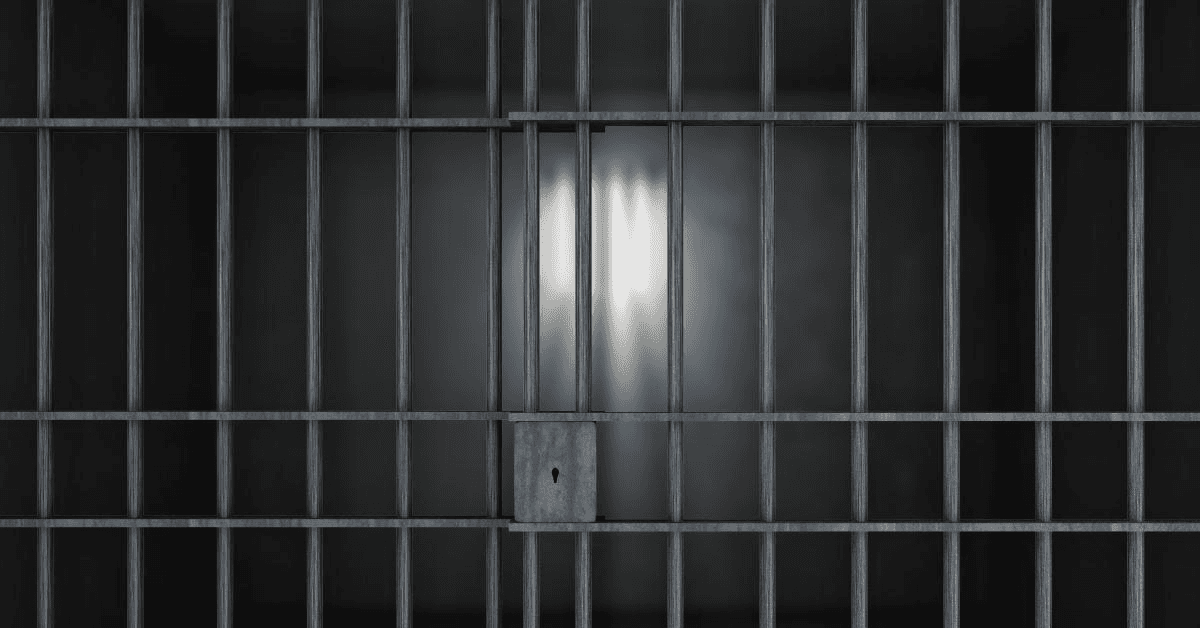

This post was originally written in Kreyòl.
Editor's note: In light of the recent events surrounding the escape of dozens of women from the Women's Prison in Cabaret, as well as a rececntly reported cholera outbreak in the national penitentiary, this piece written for Woy Magazine by Ricardo Boucher, offers some insight into the conditions being faced by women in this prison, evoking their words and the reality for prisoners across the country.
We protest
So we can get justice
So we can go to trial
Some of us have spent
Seven years here
Ten years here
Never having seen a judge
Like it or not
They will hear us all
Prison shouldn’t become poisonous
Prison shouldn’t resemble hell
We bang on the bars
We sing
We dance
We demand to be treated well
(Translated Poem from a woman at the Women’s Prison in Cabaret, Haiti)
Does the prison system in Haiti successfully bring justice to victims, as well as prevent crime from happening again? No matter your gender, you can commit an act that harms another person, a group of people or is simply against the laws and principles of a society. It is with this in mind, following the judicial system’s decision to condemn a foul act, that the physical space called prison was established; to bring justice to the victim and allow the culprit time to think about what they’ve done, so that after their sentence they can go back to becoming a regular member of society. Without a doubt, Haiti’s prisons do not accomplish this.
Through a poetry workshop held for one month in the Women’s Prison in Cabaret during the 4 Chemins Association residency, we observed a great deal about the lives of the women in this prison. In many discussions on how they were being treated, many women shared with sadness and rage the harmful conditions they experience inside the prison. These unfortunate conditions are not specific to the Women’s Prison in Cabaret alone, as they are a common occurrence for women in custody and in prison, especially in the National Penitentiary.
Among the abuses endured: sexual abuse, the absence of medical care, overpopulated prison cells where people fall asleep with difficulty, inmates incarcerated for 10 years without ever having seen a judge, and police brutality, just to name a few. If we were to name all of the abuses they suffer, this article would have no end.
I am trapped in a prison where I’ve lost myself
I am trapped in a prison where I’ve had to stop being human so that I can survive
When they say “You’ll give it all here”
It breaks my spirit into pieces
It makes me lose all hope
You’ll give it all here
means
You will spend the rest of your life here
It means you’ve spent ten years detained
It means you’ve spent time with two digits in here
(Translated poem from another detainee from the Women’s Prison in Cabaret)
This poem clearly explains how Haitian prisons represent hell, a space that ends all possibilities of a future. People who leave such a violent environment can become a greater threat to society, as prison is a laboratory for dehumanization and crime. People who are incarcerated are not considered human anymore based on the treatment they receive—from the way they are fed, to the way they are bathed. Even in death, these prisoners are stripped of their humanity—dead bodies are thrown out in Titanyen by the state, while their families oftentimes remain ignorant of their passing.
Turn this way, you see a wall
Turn the other way, you see another wall
Every day the same coat of paint and the same authoritarian voice
Prisoner
A wretched stench
The stench of food that cannot be eaten
Children and adults locked up
Even babies are born locked up
Our freedom is locked up and it makes no sense
(Translated poem from a detainee in the Women’s Prison in Cabaret)
One might ask: can a person truly think about their actions, take accountability and return to society to live a fruitful life in a space where they are stripped of their humanity? Without much thought, the answer is no. For a human to take accountability, they must be considered (and treated as) a person, first and foremost.
Better conditions must be created for incarcerated people to flourish both mentally and physically.
They must be treated with the respect and dignity owed to any human being. Locking someone up in space because they have disregarded other people’s rights while violating their rights in said space, only perpetuates the cycle of harm.
I am locked up
I am at a loss for words
I am locked up
I do not know when
The sun rises
I am locked up with tears shutting my eyes closed
I am locked up and my future ended at the prison doors
I’ve been locked up since the age of fifteen
Today I turn twenty-five
(Translated poem from a detainee in the Women’s Prison in Cabaret)
Oct 12, 2022
"We Bang on the Bars": A Poetry Workshop at the Women’s Prison in Cabaret


This post was originally written in Kreyòl.
Editor's note: In light of the recent events surrounding the escape of dozens of women from the Women's Prison in Cabaret, as well as a rececntly reported cholera outbreak in the national penitentiary, this piece written for Woy Magazine by Ricardo Boucher, offers some insight into the conditions being faced by women in this prison, evoking their words and the reality for prisoners across the country.
We protest
So we can get justice
So we can go to trial
Some of us have spent
Seven years here
Ten years here
Never having seen a judge
Like it or not
They will hear us all
Prison shouldn’t become poisonous
Prison shouldn’t resemble hell
We bang on the bars
We sing
We dance
We demand to be treated well
(Translated Poem from a woman at the Women’s Prison in Cabaret, Haiti)
Does the prison system in Haiti successfully bring justice to victims, as well as prevent crime from happening again? No matter your gender, you can commit an act that harms another person, a group of people or is simply against the laws and principles of a society. It is with this in mind, following the judicial system’s decision to condemn a foul act, that the physical space called prison was established; to bring justice to the victim and allow the culprit time to think about what they’ve done, so that after their sentence they can go back to becoming a regular member of society. Without a doubt, Haiti’s prisons do not accomplish this.
Through a poetry workshop held for one month in the Women’s Prison in Cabaret during the 4 Chemins Association residency, we observed a great deal about the lives of the women in this prison. In many discussions on how they were being treated, many women shared with sadness and rage the harmful conditions they experience inside the prison. These unfortunate conditions are not specific to the Women’s Prison in Cabaret alone, as they are a common occurrence for women in custody and in prison, especially in the National Penitentiary.
Among the abuses endured: sexual abuse, the absence of medical care, overpopulated prison cells where people fall asleep with difficulty, inmates incarcerated for 10 years without ever having seen a judge, and police brutality, just to name a few. If we were to name all of the abuses they suffer, this article would have no end.
I am trapped in a prison where I’ve lost myself
I am trapped in a prison where I’ve had to stop being human so that I can survive
When they say “You’ll give it all here”
It breaks my spirit into pieces
It makes me lose all hope
You’ll give it all here
means
You will spend the rest of your life here
It means you’ve spent ten years detained
It means you’ve spent time with two digits in here
(Translated poem from another detainee from the Women’s Prison in Cabaret)
This poem clearly explains how Haitian prisons represent hell, a space that ends all possibilities of a future. People who leave such a violent environment can become a greater threat to society, as prison is a laboratory for dehumanization and crime. People who are incarcerated are not considered human anymore based on the treatment they receive—from the way they are fed, to the way they are bathed. Even in death, these prisoners are stripped of their humanity—dead bodies are thrown out in Titanyen by the state, while their families oftentimes remain ignorant of their passing.
Turn this way, you see a wall
Turn the other way, you see another wall
Every day the same coat of paint and the same authoritarian voice
Prisoner
A wretched stench
The stench of food that cannot be eaten
Children and adults locked up
Even babies are born locked up
Our freedom is locked up and it makes no sense
(Translated poem from a detainee in the Women’s Prison in Cabaret)
One might ask: can a person truly think about their actions, take accountability and return to society to live a fruitful life in a space where they are stripped of their humanity? Without much thought, the answer is no. For a human to take accountability, they must be considered (and treated as) a person, first and foremost.
Better conditions must be created for incarcerated people to flourish both mentally and physically.
They must be treated with the respect and dignity owed to any human being. Locking someone up in space because they have disregarded other people’s rights while violating their rights in said space, only perpetuates the cycle of harm.
I am locked up
I am at a loss for words
I am locked up
I do not know when
The sun rises
I am locked up with tears shutting my eyes closed
I am locked up and my future ended at the prison doors
I’ve been locked up since the age of fifteen
Today I turn twenty-five
(Translated poem from a detainee in the Women’s Prison in Cabaret)
Oct 12, 2022
Earthquake response: if there is enough for one, there is plenty for two

If there is enough for one, there is plenty for two
(Third principle of the Bwa Kayiman)
On the morning of August 14th - more than 200 years after a group of enslaved people decided to show the world all humans were born equal - planet earth decided to show us she is no force to be reckoned with. She shook and that quake took the lives of 2248 Haitians.
The island of Haiti is one prone to earthquakes, and according to history, only the military was able to execute acts of national development and managing natural disasters. This institution died without passing on its capabilities to any other public institutions. Which is probably why the state’s response to all these predicaments happening to us is all but efficient.
The response following the January 12, 2010 earthquake was very wasteful. Because the state was weak, the UN and NGOs overstepped their authority and managed a very complex logistical challenge. What resulted from that was the CIRH (Interim Commission for the Reconstruction of Haiti) established by the Clintons, so that they could install foreigners in expat positions instead of hiring Haitian executives, and waste money without being held accountable. The examples of what happened with the American Red Cross and YELE Ayiti come to mind when speaking about poor management of donated funds. There are still victims who were living in refugee camps back then still living under tents today.
In these past ten years, what has been done to prevent the same catastrophe from happening? During those ten years, the country was busy parading and promoting its corruption and its culprits, some even amongst its highest ranked government officials. Still today, Haitians are asking where the CIRH funds have gone.
However, it is also true that efforts from the Civil Protection Agency during the last 10 years in bringing awareness on cyclones and earthquakes had been made. And this time around, this agency took steps to manage the response. It’s even been noted that, this time, NGOs and the UN made an effort to conform. But due to lack of funds and poor long term planning, the Civil Protection was unable to bring aid to many of those hit by the natural disaster. After the earthquake, the Civil Protection estimated that more than 650, 000 people were in need of assistance. In their last report, posted on their website, dated September 4th, they say they’ve been able to reach 70,000 families, which is about half of the amount of people estimated. 10 years after a similar disaster had hit (where an estimated 300,000 people lost their lives), the Haitian government is still an unfit first responder to its people.
The question remains: is Haiti equipped with an efficient, well financed and executed national plan for response to natural disasters? When digging deeper, a plan can be found on the internet for a period going from 2019 to 2030. For the appropriate execution of this plan, proper investment in infrastructures should be made, as well as ample funding for the Civil Protection and all local governments throughout the country.
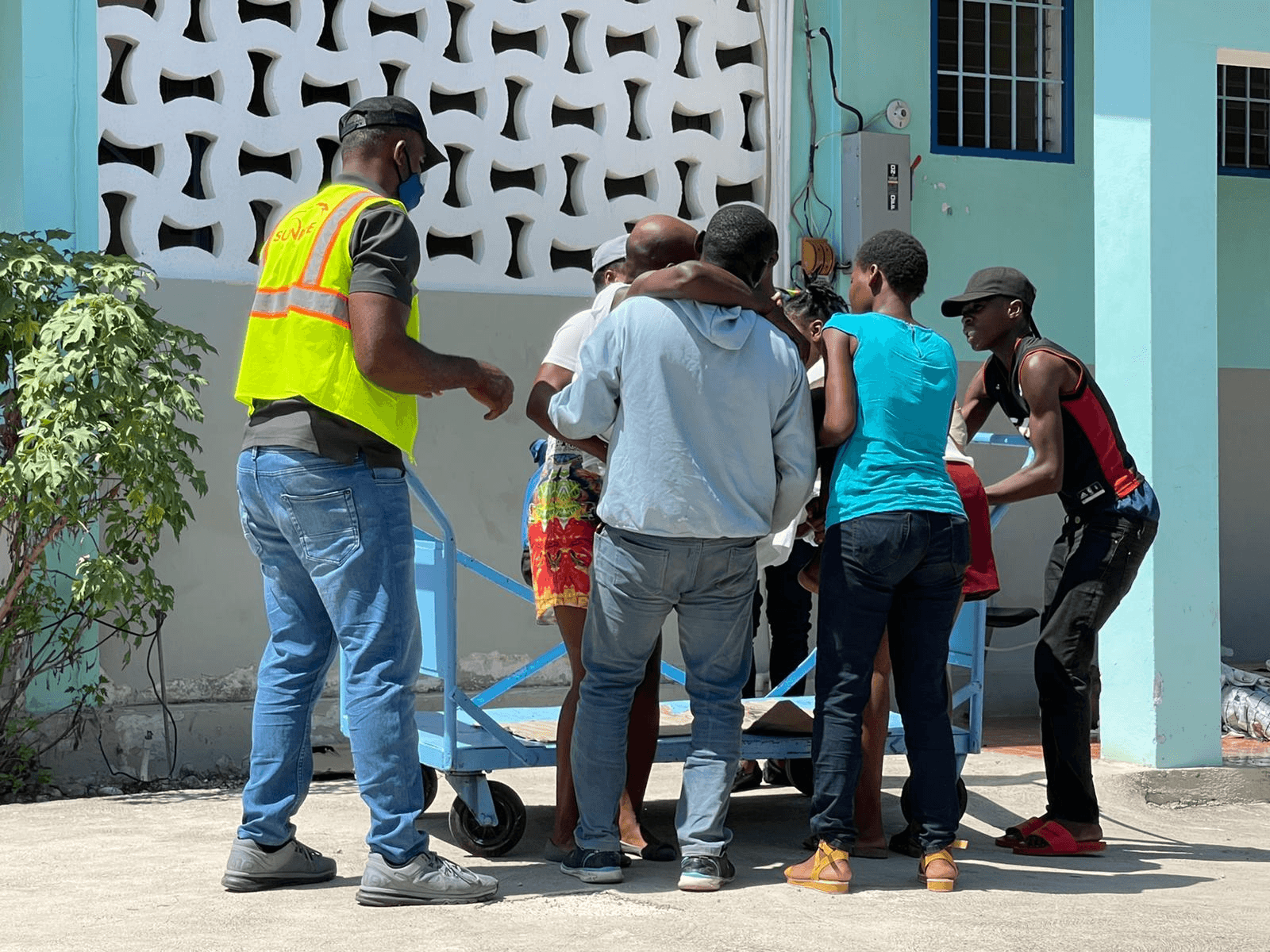
For the time being, only solidarity can help alleviate the population’s burden. The day after the earthquake, various groups of people, coming from diverse social backgrounds, began cooperating to get help to the Southern peninsula of the island, where damages were substantial. From the internet to radio stations, calls for solidarity were coming from everywhere, and everyone was lending a hand. Messages were sent out quickly. It had been a long time since Haitian solidarity had been this palpable and concrete. People were going through a great deal to bring help to those in need. A round of applause for the Haitian medical community, those young doctors and nurses who left their homes on the day after the disaster to reach those in need of their assistance. Their attitude and quick responses made it so that the amputation frenzy that had happened in 2010 didn’t happen again. The government wasn’t ready to help the people, but the people were not willing to sit and wait for the government either.
Nov 23, 2021
Earthquake response: if there is enough for one, there is plenty for two


If there is enough for one, there is plenty for two
(Third principle of the Bwa Kayiman)
On the morning of August 14th - more than 200 years after a group of enslaved people decided to show the world all humans were born equal - planet earth decided to show us she is no force to be reckoned with. She shook and that quake took the lives of 2248 Haitians.
The island of Haiti is one prone to earthquakes, and according to history, only the military was able to execute acts of national development and managing natural disasters. This institution died without passing on its capabilities to any other public institutions. Which is probably why the state’s response to all these predicaments happening to us is all but efficient.
The response following the January 12, 2010 earthquake was very wasteful. Because the state was weak, the UN and NGOs overstepped their authority and managed a very complex logistical challenge. What resulted from that was the CIRH (Interim Commission for the Reconstruction of Haiti) established by the Clintons, so that they could install foreigners in expat positions instead of hiring Haitian executives, and waste money without being held accountable. The examples of what happened with the American Red Cross and YELE Ayiti come to mind when speaking about poor management of donated funds. There are still victims who were living in refugee camps back then still living under tents today.
In these past ten years, what has been done to prevent the same catastrophe from happening? During those ten years, the country was busy parading and promoting its corruption and its culprits, some even amongst its highest ranked government officials. Still today, Haitians are asking where the CIRH funds have gone.
However, it is also true that efforts from the Civil Protection Agency during the last 10 years in bringing awareness on cyclones and earthquakes had been made. And this time around, this agency took steps to manage the response. It’s even been noted that, this time, NGOs and the UN made an effort to conform. But due to lack of funds and poor long term planning, the Civil Protection was unable to bring aid to many of those hit by the natural disaster. After the earthquake, the Civil Protection estimated that more than 650, 000 people were in need of assistance. In their last report, posted on their website, dated September 4th, they say they’ve been able to reach 70,000 families, which is about half of the amount of people estimated. 10 years after a similar disaster had hit (where an estimated 300,000 people lost their lives), the Haitian government is still an unfit first responder to its people.
The question remains: is Haiti equipped with an efficient, well financed and executed national plan for response to natural disasters? When digging deeper, a plan can be found on the internet for a period going from 2019 to 2030. For the appropriate execution of this plan, proper investment in infrastructures should be made, as well as ample funding for the Civil Protection and all local governments throughout the country.
For the time being, only solidarity can help alleviate the population’s burden. The day after the earthquake, various groups of people, coming from diverse social backgrounds, began cooperating to get help to the Southern peninsula of the island, where damages were substantial. From the internet to radio stations, calls for solidarity were coming from everywhere, and everyone was lending a hand. Messages were sent out quickly. It had been a long time since Haitian solidarity had been this palpable and concrete. People were going through a great deal to bring help to those in need. A round of applause for the Haitian medical community, those young doctors and nurses who left their homes on the day after the disaster to reach those in need of their assistance. Their attitude and quick responses made it so that the amputation frenzy that had happened in 2010 didn’t happen again. The government wasn’t ready to help the people, but the people were not willing to sit and wait for the government either.
Nov 23, 2021
Hands Off Haiti


Any “modicum of stability” foreign intervention brings is at the expense of Haiti’s most vulnerable people.
On June 20th, Jovenel Moise made his first statement addressing the more recent round of fighting going on in Matisan/Fontamara after his trip to Turkey. In it, he said help is required from the international community, but was careful to say that he is not asking for foreign troops to return. Even then that statement was concerning. This prompted me to begin writing this essay, not knowing then that that was Jovenel Moise’s last press conference.
The U.S. occupation which lasted from 1915 - 1934 was a systematic campaign of economic pillage and plunder imposed through violence, resulting in the deaths of fifteen thousand Haitians. US troops came again in 1994 to reinstate Aristide and briefly again after the coup d’etat in 2004. More recently, UN peacekeeping forces have introduced Cholera to Haiti resulting in 10,000 people dead. There were countless credible allegations of rape by the UN soldiers and abandoned children. And this same UN intervention facilitated the propagation of armed gangs in Port-au-Prince and killed many civilians in the raids it waged against gangs, several of them women and children. UN missions don’t just fail in Haiti, this is the case in other countries as well. Often, the solutions implemented are not adapted to the realities on the ground and as the political landscape shifts so does the mission, dragging it out many years. UN missions become increasingly violent and interventionist, no longer only tasked with keeping the peace.
Now that Jovenel Moise is dead, calls for foreign intervention have spiked in the public discourse reflected in the press, face to face conversations and across social media. In response, many Haitians have been vocal about why it’s important to guard against foreign intervention.
We have learned that as of Sunday, the US is considering Claude Joseph’s request. The proponents of foreign intervention for swift elections argue its merits to avoid chaos and for the sake of stability. We know that when disaster strikes, the assumption is that Black people will descend into senseless violence and pillaging. This was the assumption after the earthquake in 2010. However, like after the earthquake, Haitians have largely stayed home following the assassination. As of Friday, businesses were open again and Saturday evening Haitians excitedly watched a beautiful football match.
The reality is the source of chaos is the international community backed PHTK party. Structurally, the Haitian economy and public institutions are being held hostage by economic and political kingmakers. Under PHTK, Haitian institutions which were already weak have accelerated to a stand still. The Ministry of Social Affairs has not functioned in many months, the courts were shut down due to a strike, the health system was in tatters even before Corona hit. The Cour des Comptes’ power has been gutted. Haitian’s purchasing power has dropped under PHTK and 4 million people are in dire need of food. According to economist Fritz Jean, Haitians lose $45 million from remittances from the diaspora due to the gap between the BRH’s exchange rate and how much people actually receive when they need dollars.
The security situation was already untenable under Moise. We experienced over 1000 kidnappings in 2020, and now witness them together in a collective morbid watch party on social media. Politically motivated massacres have become commonplace and the tragic failed operation by the police in Vilaj Dedye laid bare the PNH’s limits to protect Haitian people and its own police.
This situation of chaos caused by the PHTK form of governance brought the public institutions to a halt, offering the government a chance to shore up its power and forge ahead with a referendum for a new constitution that makes the president and ministers above the law during and after their terms. This is the chaos which a foreign intervention would seal into place, because we know PHTK is not able to conduct a free and fair elections.
Questioning these knee-jerk proposals by observing the reality of Haitian lives under PHTK over the past decade also defends against discourse that eulogizes Jovenel Moise and make him a martyr. The haste with which such calls for boots on the ground does not give Haitians the time to figure out what really happened with Moise’s death and what political settlement could be formed. That is going to take time. Instead, Haitians have found ourselves being rushed by the international community while conflicting ambitions for power abound; a consensus is unlikely.
Professor Joy James explains that discourse on liberation movements that is grounded in the actual material wellbeing of the people and concrete resistance to state violence meets opposition in places where knowledge is produced (academia, the media etc). This is because these institutions are propped up by state and private capital. This is why calls for occupation are so shortsighted, like in a recent disappointing Washington Post editorial. The liberation and agency of the Haitian people are abstractions that do not matter and well worth the pains endured for a “modicum of stability.”
We can discuss the damage this death means for the presidency just as the other branches have been systematically dismantled by Jovenel. But the grievances against Moise and PHTK were based on real suffering, corruption, kidnapping, food insecurity and gang violence. There is an aim to keep people from thinking critically to maintain the status quo. Given all that we know about previous foreign intervention, we understand that this “modicum of stability” comes at the expense of Haiti’s most vulnerable people. Let us not repeat the same mistakes.
Woy can't do this work without you! Consider becoming a patron of our Patreon to help support this publication. And subscribe to our weekly newsletter to keep up with notable news about Haiti and her dyaspora.
feature image via haitiliberte.com
Jul 16, 2021
Hands Off Haiti


Any “modicum of stability” foreign intervention brings is at the expense of Haiti’s most vulnerable people.
On June 20th, Jovenel Moise made his first statement addressing the more recent round of fighting going on in Matisan/Fontamara after his trip to Turkey. In it, he said help is required from the international community, but was careful to say that he is not asking for foreign troops to return. Even then that statement was concerning. This prompted me to begin writing this essay, not knowing then that that was Jovenel Moise’s last press conference.
The U.S. occupation which lasted from 1915 - 1934 was a systematic campaign of economic pillage and plunder imposed through violence, resulting in the deaths of fifteen thousand Haitians. US troops came again in 1994 to reinstate Aristide and briefly again after the coup d’etat in 2004. More recently, UN peacekeeping forces have introduced Cholera to Haiti resulting in 10,000 people dead. There were countless credible allegations of rape by the UN soldiers and abandoned children. And this same UN intervention facilitated the propagation of armed gangs in Port-au-Prince and killed many civilians in the raids it waged against gangs, several of them women and children. UN missions don’t just fail in Haiti, this is the case in other countries as well. Often, the solutions implemented are not adapted to the realities on the ground and as the political landscape shifts so does the mission, dragging it out many years. UN missions become increasingly violent and interventionist, no longer only tasked with keeping the peace.
Now that Jovenel Moise is dead, calls for foreign intervention have spiked in the public discourse reflected in the press, face to face conversations and across social media. In response, many Haitians have been vocal about why it’s important to guard against foreign intervention.
We have learned that as of Sunday, the US is considering Claude Joseph’s request. The proponents of foreign intervention for swift elections argue its merits to avoid chaos and for the sake of stability. We know that when disaster strikes, the assumption is that Black people will descend into senseless violence and pillaging. This was the assumption after the earthquake in 2010. However, like after the earthquake, Haitians have largely stayed home following the assassination. As of Friday, businesses were open again and Saturday evening Haitians excitedly watched a beautiful football match.
The reality is the source of chaos is the international community backed PHTK party. Structurally, the Haitian economy and public institutions are being held hostage by economic and political kingmakers. Under PHTK, Haitian institutions which were already weak have accelerated to a stand still. The Ministry of Social Affairs has not functioned in many months, the courts were shut down due to a strike, the health system was in tatters even before Corona hit. The Cour des Comptes’ power has been gutted. Haitian’s purchasing power has dropped under PHTK and 4 million people are in dire need of food. According to economist Fritz Jean, Haitians lose $45 million from remittances from the diaspora due to the gap between the BRH’s exchange rate and how much people actually receive when they need dollars.
The security situation was already untenable under Moise. We experienced over 1000 kidnappings in 2020, and now witness them together in a collective morbid watch party on social media. Politically motivated massacres have become commonplace and the tragic failed operation by the police in Vilaj Dedye laid bare the PNH’s limits to protect Haitian people and its own police.
This situation of chaos caused by the PHTK form of governance brought the public institutions to a halt, offering the government a chance to shore up its power and forge ahead with a referendum for a new constitution that makes the president and ministers above the law during and after their terms. This is the chaos which a foreign intervention would seal into place, because we know PHTK is not able to conduct a free and fair elections.
Questioning these knee-jerk proposals by observing the reality of Haitian lives under PHTK over the past decade also defends against discourse that eulogizes Jovenel Moise and make him a martyr. The haste with which such calls for boots on the ground does not give Haitians the time to figure out what really happened with Moise’s death and what political settlement could be formed. That is going to take time. Instead, Haitians have found ourselves being rushed by the international community while conflicting ambitions for power abound; a consensus is unlikely.
Professor Joy James explains that discourse on liberation movements that is grounded in the actual material wellbeing of the people and concrete resistance to state violence meets opposition in places where knowledge is produced (academia, the media etc). This is because these institutions are propped up by state and private capital. This is why calls for occupation are so shortsighted, like in a recent disappointing Washington Post editorial. The liberation and agency of the Haitian people are abstractions that do not matter and well worth the pains endured for a “modicum of stability.”
We can discuss the damage this death means for the presidency just as the other branches have been systematically dismantled by Jovenel. But the grievances against Moise and PHTK were based on real suffering, corruption, kidnapping, food insecurity and gang violence. There is an aim to keep people from thinking critically to maintain the status quo. Given all that we know about previous foreign intervention, we understand that this “modicum of stability” comes at the expense of Haiti’s most vulnerable people. Let us not repeat the same mistakes.
Woy can't do this work without you! Consider becoming a patron of our Patreon to help support this publication. And subscribe to our weekly newsletter to keep up with notable news about Haiti and her dyaspora.
feature image via haitiliberte.com
Jul 16, 2021
Hands Off Haiti


Jul 16, 2021
What Do We Do in the Face of Government Failure?


Even as the gangs extend their control under the passivity of this government, let us continue to erect a wall of solidarity, love and resources around our brothers and sisters in Matisan, Bele, lower Delma and Lasalin.
Since early June, there has been increased clashes between gangs throughout Port -au-Prince, more specifically Martissant-Fontamara, au Bel Air, au bas de Delmas (2,4, 6) et à La Saline. The Gran Ravin gang moved on Matisan to gain territory, killing, pillaging and burning houses, sending thousands from their homes. This violence left many to sleep in the street in the middle of the rainy season in early June, for those who do not have friends and family to receive them.
The Haitian government who had previously announced that gangs had agreed to stop kidnappings for two months, was silent for four whole days. Eventually, they only produced a pathetic press conference by the Prime Minister and Police Chief where they claimed to have held three meetings in 72 hours and taken a stroll through Matisan to demonstrate that things were under control. During this press conference, no summary of the loss of life and the people hurt was given, nor an estimate of the folks displaced, or what the government aimed to do to help them.
We always hope that the government will step up and at least attempt to meet its end of the social contract in moments like these. But in the meantime, even as we ask the government to act, as always, Haitians have been taking care of each other. There is no need to explain to Haitians the merits of mutual aid. We have been surviving on mutual aid since before there was a term for it. In the place of a dysfunctional social protection apparatus that serves few and is further crippled by state capture, Haitians have erected a set of social protection practices anchored in institutions like the lakou and our values of konbit. Friends and family have been taking in their loved ones from Matisan. Early on, someone opened up a space near the beach to offer temporary shelter and another provided buses to transport people there. On June 6th, Radio Lumiere, the most popular evangelical radio station, held a show mobilizing the churches in Kafou and prominent private sector actors called on their peers to give.
Admittedly, because of its proximity to Matisan, Kafou has been receiving the bulk of those displaced and the local authorities did not have the luxury of not responding. The Mayor of Kafou in coordination with Pwoteksyon Sivil Kafou and a number of churches in an interview on Majik 9 explained that they are taking care of over 500 people in the Sant Espotif nan Kafou on June 7th. They are also helping people who want to go home throughout the country to do so. As of 10 June, the Sant Kafou was housing over 1000 people.
The gang crisis in Haiti is one that is complex, exacerbated by foreign interference, irresponsible NGOs and reinforced by a legal bandit PHTK form of governance. Only structural change brought by a new political class will address the root causes. There is constant debate over whether regular citizens should demand the government take action or whether we should share our own resources in such moments of humanitarian crisis. Scholars analyze this tension by breaking down the various roles the civil society often plays: supplementing, complementing or pushing the state. Times like these remind us that we must do all.
The situation is dire, and while the government refuses to act we have a duty to help our neighbours. Even as the gangs extend their control under the passivity of this government, let us continue to erect a wall of solidarity, love and resources around our brothers and sisters in Matisan, Bele, lower Delma and Lasalin.
Here are a few ways you can help those displaced by the gang violence in Haiti. We will add to this list as more efforts come to our attention.
Kay trans, a home for LGBT youth has seen an increase in applications to their shelter. With your help, they can begin to take in and support even more displaced LGBT youth in Haiti. - https://gofund.me/b1a9c5bc
Nou Pap Dòmi, an activist group in Haiti, is raising funds to provide support and essentials to families displaced because of violence in Martissant. You can support by donating here: https://secure.givelively.org/donate/quixote-center-inc/emergency-support-for-martissant-haiti
Jun 25, 2021
What Do We Do in the Face of Government Failure?


Even as the gangs extend their control under the passivity of this government, let us continue to erect a wall of solidarity, love and resources around our brothers and sisters in Matisan, Bele, lower Delma and Lasalin.
Since early June, there has been increased clashes between gangs throughout Port -au-Prince, more specifically Martissant-Fontamara, au Bel Air, au bas de Delmas (2,4, 6) et à La Saline. The Gran Ravin gang moved on Matisan to gain territory, killing, pillaging and burning houses, sending thousands from their homes. This violence left many to sleep in the street in the middle of the rainy season in early June, for those who do not have friends and family to receive them.
The Haitian government who had previously announced that gangs had agreed to stop kidnappings for two months, was silent for four whole days. Eventually, they only produced a pathetic press conference by the Prime Minister and Police Chief where they claimed to have held three meetings in 72 hours and taken a stroll through Matisan to demonstrate that things were under control. During this press conference, no summary of the loss of life and the people hurt was given, nor an estimate of the folks displaced, or what the government aimed to do to help them.
We always hope that the government will step up and at least attempt to meet its end of the social contract in moments like these. But in the meantime, even as we ask the government to act, as always, Haitians have been taking care of each other. There is no need to explain to Haitians the merits of mutual aid. We have been surviving on mutual aid since before there was a term for it. In the place of a dysfunctional social protection apparatus that serves few and is further crippled by state capture, Haitians have erected a set of social protection practices anchored in institutions like the lakou and our values of konbit. Friends and family have been taking in their loved ones from Matisan. Early on, someone opened up a space near the beach to offer temporary shelter and another provided buses to transport people there. On June 6th, Radio Lumiere, the most popular evangelical radio station, held a show mobilizing the churches in Kafou and prominent private sector actors called on their peers to give.
Admittedly, because of its proximity to Matisan, Kafou has been receiving the bulk of those displaced and the local authorities did not have the luxury of not responding. The Mayor of Kafou in coordination with Pwoteksyon Sivil Kafou and a number of churches in an interview on Majik 9 explained that they are taking care of over 500 people in the Sant Espotif nan Kafou on June 7th. They are also helping people who want to go home throughout the country to do so. As of 10 June, the Sant Kafou was housing over 1000 people.
The gang crisis in Haiti is one that is complex, exacerbated by foreign interference, irresponsible NGOs and reinforced by a legal bandit PHTK form of governance. Only structural change brought by a new political class will address the root causes. There is constant debate over whether regular citizens should demand the government take action or whether we should share our own resources in such moments of humanitarian crisis. Scholars analyze this tension by breaking down the various roles the civil society often plays: supplementing, complementing or pushing the state. Times like these remind us that we must do all.
The situation is dire, and while the government refuses to act we have a duty to help our neighbours. Even as the gangs extend their control under the passivity of this government, let us continue to erect a wall of solidarity, love and resources around our brothers and sisters in Matisan, Bele, lower Delma and Lasalin.
Here are a few ways you can help those displaced by the gang violence in Haiti. We will add to this list as more efforts come to our attention.
Kay trans, a home for LGBT youth has seen an increase in applications to their shelter. With your help, they can begin to take in and support even more displaced LGBT youth in Haiti. - https://gofund.me/b1a9c5bc
Nou Pap Dòmi, an activist group in Haiti, is raising funds to provide support and essentials to families displaced because of violence in Martissant. You can support by donating here: https://secure.givelively.org/donate/quixote-center-inc/emergency-support-for-martissant-haiti
Jun 25, 2021
CONTACT
CONTACT
CONTACT