

This post was originally written in Kreyòl.
Editor's note: In light of the recent events surrounding the escape of dozens of women from the Women's Prison in Cabaret, as well as a rececntly reported cholera outbreak in the national penitentiary, this piece written for Woy Magazine by Ricardo Boucher, offers some insight into the conditions being faced by women in this prison, evoking their words and the reality for prisoners across the country.
We protest
So we can get justice
So we can go to trial
Some of us have spent
Seven years here
Ten years here
Never having seen a judge
Like it or not
They will hear us all
Prison shouldn’t become poisonous
Prison shouldn’t resemble hell
We bang on the bars
We sing
We dance
We demand to be treated well
(Translated Poem from a woman at the Women’s Prison in Cabaret, Haiti)
Does the prison system in Haiti successfully bring justice to victims, as well as prevent crime from happening again? No matter your gender, you can commit an act that harms another person, a group of people or is simply against the laws and principles of a society. It is with this in mind, following the judicial system’s decision to condemn a foul act, that the physical space called prison was established; to bring justice to the victim and allow the culprit time to think about what they’ve done, so that after their sentence they can go back to becoming a regular member of society. Without a doubt, Haiti’s prisons do not accomplish this.
Through a poetry workshop held for one month in the Women’s Prison in Cabaret during the 4 Chemins Association residency, we observed a great deal about the lives of the women in this prison. In many discussions on how they were being treated, many women shared with sadness and rage the harmful conditions they experience inside the prison. These unfortunate conditions are not specific to the Women’s Prison in Cabaret alone, as they are a common occurrence for women in custody and in prison, especially in the National Penitentiary.
Among the abuses endured: sexual abuse, the absence of medical care, overpopulated prison cells where people fall asleep with difficulty, inmates incarcerated for 10 years without ever having seen a judge, and police brutality, just to name a few. If we were to name all of the abuses they suffer, this article would have no end.
I am trapped in a prison where I’ve lost myself
I am trapped in a prison where I’ve had to stop being human so that I can survive
When they say “You’ll give it all here”
It breaks my spirit into pieces
It makes me lose all hope
You’ll give it all here
means
You will spend the rest of your life here
It means you’ve spent ten years detained
It means you’ve spent time with two digits in here
(Translated poem from another detainee from the Women’s Prison in Cabaret)
This poem clearly explains how Haitian prisons represent hell, a space that ends all possibilities of a future. People who leave such a violent environment can become a greater threat to society, as prison is a laboratory for dehumanization and crime. People who are incarcerated are not considered human anymore based on the treatment they receive—from the way they are fed, to the way they are bathed. Even in death, these prisoners are stripped of their humanity—dead bodies are thrown out in Titanyen by the state, while their families oftentimes remain ignorant of their passing.
Turn this way, you see a wall
Turn the other way, you see another wall
Every day the same coat of paint and the same authoritarian voice
Prisoner
A wretched stench
The stench of food that cannot be eaten
Children and adults locked up
Even babies are born locked up
Our freedom is locked up and it makes no sense
(Translated poem from a detainee in the Women’s Prison in Cabaret)
One might ask: can a person truly think about their actions, take accountability and return to society to live a fruitful life in a space where they are stripped of their humanity? Without much thought, the answer is no. For a human to take accountability, they must be considered (and treated as) a person, first and foremost.
Better conditions must be created for incarcerated people to flourish both mentally and physically.
They must be treated with the respect and dignity owed to any human being. Locking someone up in space because they have disregarded other people’s rights while violating their rights in said space, only perpetuates the cycle of harm.
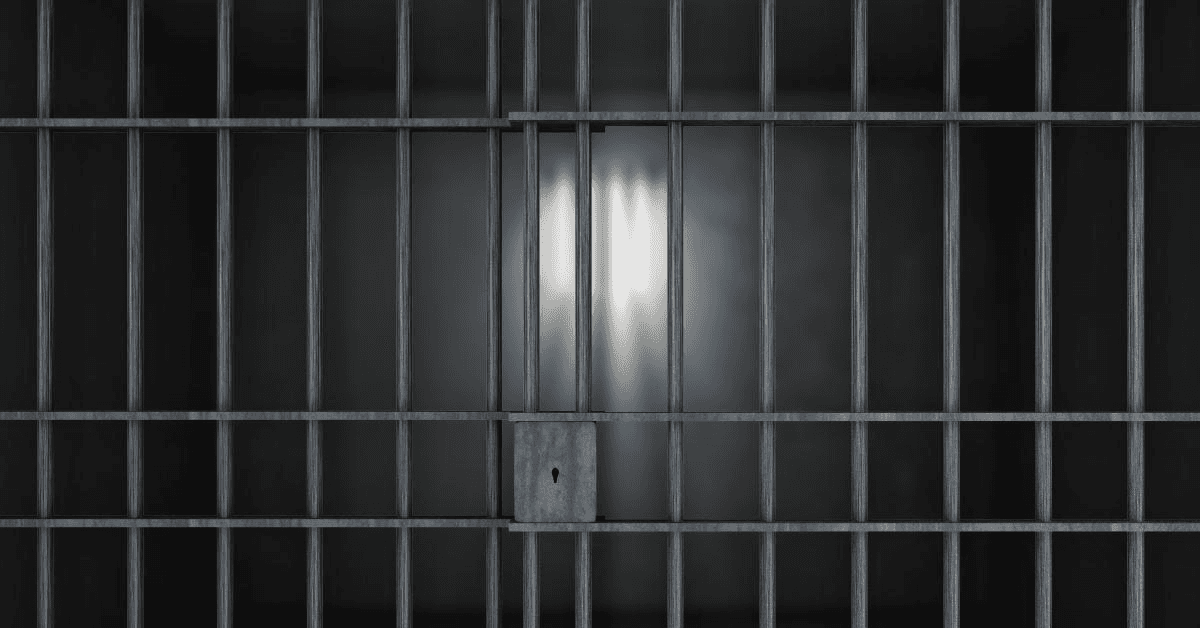
I am locked up
I am at a loss for words
I am locked up
I do not know when
The sun rises
I am locked up with tears shutting my eyes closed
I am locked up and my future ended at the prison doors
I’ve been locked up since the age of fifteen
Today I turn twenty-five
(Translated poem from a detainee in the Women’s Prison in Cabaret)


" height="102.5816409423233px" id="g2kZUfxvI" width="102.91800162469531px"/></svg>)
" height="103px" id="oG538LvCh" width="102.99817255782794px"/></svg>)
" height="103px" id="SKAc1JCfN" transform="translate(1.11 0)" width="100.78524425744274px"/></svg>)