Search
Read in kreyòl


Memory Work
Memory Work
Memory Work
Woy Presents A New Radio Documentary about Haitian Music


There has been a mass exodus of migration from Haiti to cities like New York, Miami, Philadelphia, Boston, etc. This may seem random and arbitrary to the random observer, but this has been a steady result of years of imperialism and government neglect, and the Haitian people have been singing about it the entire time.
This documentary weaves together the voices of Haitian artists and activists, in dialogue with historical audio. We chronicle how Haitians have always used song as the preeminent tool for preserving their shared memory of oppression and injustice — and for mapping a hopeful vision for their future.

Our co-hosts are Haitian sisters Nathalie (Talie) and Mélodie Cerin, with Talie in Philadelphia and Mélodie in Haiti. They bring together those brave voices from Haiti’s past and the songs and experiences of today’s outstanding Haitian musicians. This documentary features musicians, Sherlee Skai and John Steve Brunache, an intergenerational look at the Haitian musical tradition of the atis angaje.
In partnership with the International Women's Media Foundation and American Public Media, Woy Magazine is so excited to share this project that offers a new insight into Haitian culture. Keep an eye (ear) out for this radio documentary on a public radio station near you. See below for a list of past and upcoming air times and cities (some of these dates and times are subject to change):
PENNSYLVANIA
Philadelphia WHYY Sun, Feb 23, 6 pm
Cape MayWNJZ
Atlantic CityWNJN
ManahawkinWNJM
Pittsburgh WESA Fri, Feb 21, 9 pm
CALIFORNIA
San Diego KPBSSun, Feb 16, 5pm
CalexicoKQVO
GEORGIA
• Atlanta WABE Sat, Feb 15, 7pm
ILLINOIS
Carbondale WSIU Thurs, Feb 6, 8pm
Olney WUSI
Mt. Vernon WVSI
INDIANA
Bloomington WFIU Sat, Feb 8, 5 pm
IOWA
Iowa Public Radio (WOI AM, FM)Wed, Feb 5, 1 pm
Iowa Public Broadcasting
Des Moines/AmesWOI-FM
BettendorfKNSB
CarrollKNSC
Cedar Falls/Waterloo/Cedar Rapids KUNI
Clear lake/Mason City KNSM
DavenportKUNI
DubuqueKNSY
Iowa CityKUNI
Fort DodgeKNSK
LamoniKNSL
OttumwaKNSZ
Des Moines/Ames **WOI-AM (IPR News)**
Cedar Rapids/Iowa City/Quad Cities WSUI-AM
Clear lake/Mason City KRNI-AM
NEW YORK
New York City: WNYC-AM & FM (New York Public Radio) Sat, Feb 15, 6 pm
New York City WNYC-FM
New York City WNYC-AM820
Trenton, NJWNJT
Sussex, NJWNJP
Netcong, NJWNJY
Toms River, NJWNJO
OHIO
Yellow Springs WYSO Sat, March 8, 4pm
Toledo WGTEWed, Feb 12, 7pm
Lima WGLE
Defiance WGDE
Bryan WGBE
OKLAHOMA
Oklahoma City/ Norman/ Stillwater KGOU Sun, Feb 2, noon
SpencerKROU
WoodwardKWOU
ClintonKQOU
AdaKOUA
OREGON
PortlandKOPB Sun, Feb 2, 9pm
Astoria KOAC-FM
Corvallis KOAC-AM
Eugene KOPB-AM
Bend KOAB
Pendleton KRBM
La Grande KTVR
Baker City KOBK
Gleneden Beach KOGL
Lakeview KOAP
Tillamook KTMK
The Dalles KOTD
John Day KOJD
Enterprise KETP
Hood River KHRV
Burns KOBN
*We will continue to update this list as more cities pick up this documentary.
Feb 21, 2025
by
Woy Presents A New Radio Documentary about Haitian Music


There has been a mass exodus of migration from Haiti to cities like New York, Miami, Philadelphia, Boston, etc. This may seem random and arbitrary to the random observer, but this has been a steady result of years of imperialism and government neglect, and the Haitian people have been singing about it the entire time.
This documentary weaves together the voices of Haitian artists and activists, in dialogue with historical audio. We chronicle how Haitians have always used song as the preeminent tool for preserving their shared memory of oppression and injustice — and for mapping a hopeful vision for their future.

Our co-hosts are Haitian sisters Nathalie (Talie) and Mélodie Cerin, with Talie in Philadelphia and Mélodie in Haiti. They bring together those brave voices from Haiti’s past and the songs and experiences of today’s outstanding Haitian musicians. This documentary features musicians, Sherlee Skai and John Steve Brunache, an intergenerational look at the Haitian musical tradition of the atis angaje.
In partnership with the International Women's Media Foundation and American Public Media, Woy Magazine is so excited to share this project that offers a new insight into Haitian culture. Keep an eye (ear) out for this radio documentary on a public radio station near you. See below for a list of past and upcoming air times and cities (some of these dates and times are subject to change):
PENNSYLVANIA
Philadelphia WHYY Sun, Feb 23, 6 pm
Cape MayWNJZ
Atlantic CityWNJN
ManahawkinWNJM
Pittsburgh WESA Fri, Feb 21, 9 pm
CALIFORNIA
San Diego KPBSSun, Feb 16, 5pm
CalexicoKQVO
GEORGIA
• Atlanta WABE Sat, Feb 15, 7pm
ILLINOIS
Carbondale WSIU Thurs, Feb 6, 8pm
Olney WUSI
Mt. Vernon WVSI
INDIANA
Bloomington WFIU Sat, Feb 8, 5 pm
IOWA
Iowa Public Radio (WOI AM, FM)Wed, Feb 5, 1 pm
Iowa Public Broadcasting
Des Moines/AmesWOI-FM
BettendorfKNSB
CarrollKNSC
Cedar Falls/Waterloo/Cedar Rapids KUNI
Clear lake/Mason City KNSM
DavenportKUNI
DubuqueKNSY
Iowa CityKUNI
Fort DodgeKNSK
LamoniKNSL
OttumwaKNSZ
Des Moines/Ames **WOI-AM (IPR News)**
Cedar Rapids/Iowa City/Quad Cities WSUI-AM
Clear lake/Mason City KRNI-AM
NEW YORK
New York City: WNYC-AM & FM (New York Public Radio) Sat, Feb 15, 6 pm
New York City WNYC-FM
New York City WNYC-AM820
Trenton, NJWNJT
Sussex, NJWNJP
Netcong, NJWNJY
Toms River, NJWNJO
OHIO
Yellow Springs WYSO Sat, March 8, 4pm
Toledo WGTEWed, Feb 12, 7pm
Lima WGLE
Defiance WGDE
Bryan WGBE
OKLAHOMA
Oklahoma City/ Norman/ Stillwater KGOU Sun, Feb 2, noon
SpencerKROU
WoodwardKWOU
ClintonKQOU
AdaKOUA
OREGON
PortlandKOPB Sun, Feb 2, 9pm
Astoria KOAC-FM
Corvallis KOAC-AM
Eugene KOPB-AM
Bend KOAB
Pendleton KRBM
La Grande KTVR
Baker City KOBK
Gleneden Beach KOGL
Lakeview KOAP
Tillamook KTMK
The Dalles KOTD
John Day KOJD
Enterprise KETP
Hood River KHRV
Burns KOBN
*We will continue to update this list as more cities pick up this documentary.
Feb 21, 2025
by
Haiti, Wakanda, and Capitalist Realism

It matters very little if one is pro-capitalist or not, for as capitalism has transcended such dualities of pros and cons, the mere act of existing is capitalist...
ALAIN MARTIN
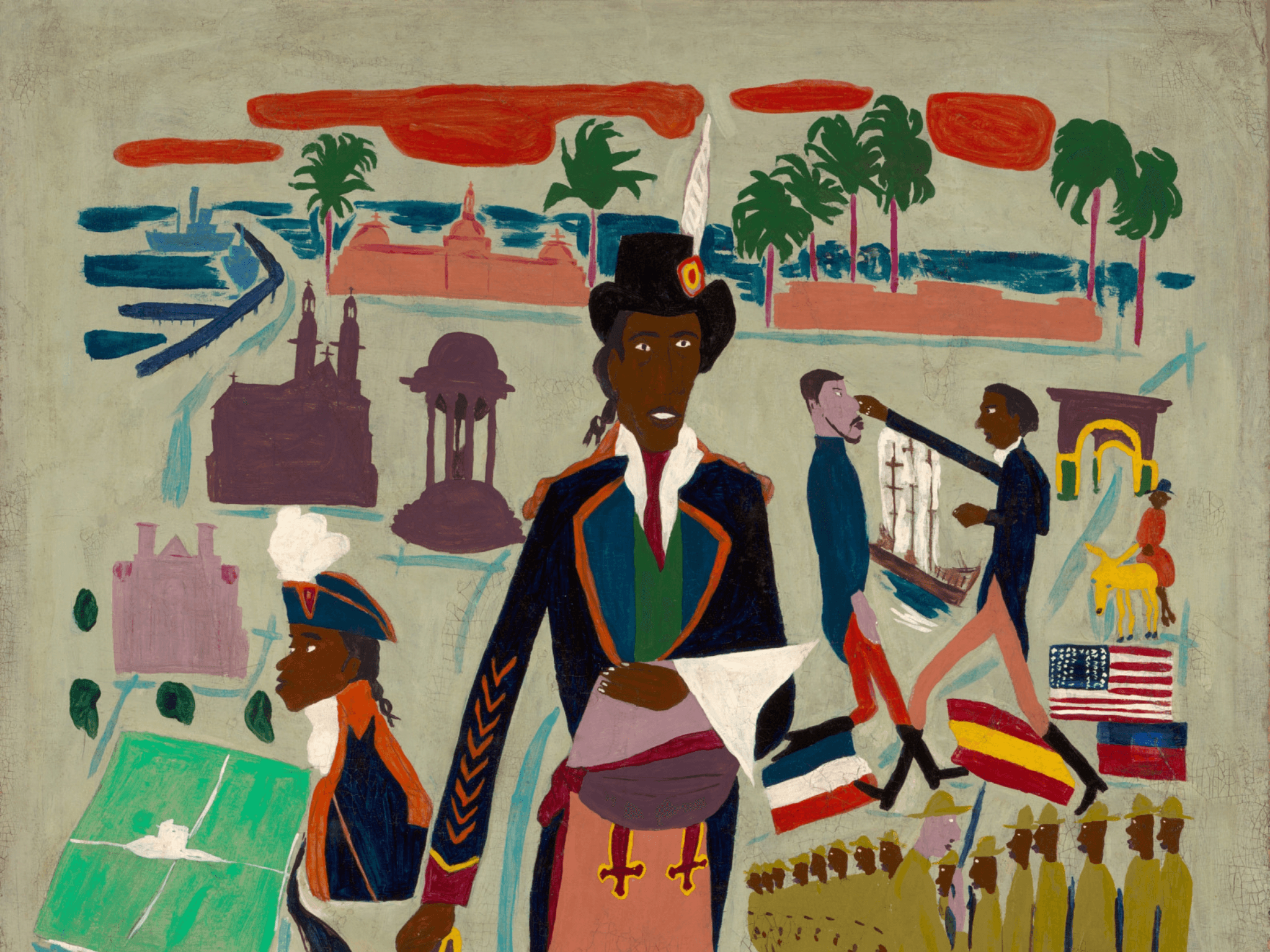
Not too long before writing this piece, trending on Haitian Twitter was the surprising revelation that Haiti had been featured, prominently so, in the latest Disney tentpole, Wakanda Forever. One scene pivotal to advancing the film’s plot took place in Cap-Haitien, Haiti’s former capital. Another featured a character that was not only central to the film but seems poised to hold critical sway in phase 5 of Marvel’s cinematic extravaganza based on their own comics; that character is named Toussaint, an homage to Toussaint L’Ouverture, a seminal figure of the Haitian Revolution. That surprising revelation set off a storm of excitement in the social media world as Haitians heralded the improbable reality of seeing their distressed country in one of the decade's most anticipated and biggest blockbuster films. It is this excitement and this celebration that reminded me of the late author Mark Fisher and his growing influential concept of Capitalist Realism. If we consider Haiti’s appearance in Wakanda Forever within the context of Fisher’s Capitalist Realism, we duly realize that there is not much to celebrate in the first black country in the Western Hemisphere making an appearance in a Hollywood superhero film.
Mark Fisher’s 'Capitalist Realism' isn’t a criticism of capitalism as it is a sulky reminder that capitalism should no longer be considered simply a mere economic system; it is now a psychological state of being, a way of life that is now entrenched in our very being. It matters very little if one is pro-capitalist or not, for as capitalism has transcended such dualities of pros and cons, the mere act of existing is capitalist, for capitalism has cunningly evolved to integrate even the views of its most formidable opponents within its operating framework. In other words, capitalism is completely capable of offering you, at a profit, that which it has continuously deprived you of. Companionship for the loneliness one feels in the ongoing digitization of human life; a sense of meaning and purpose in an ever-secular society. Mass protests happen on Facebook, as was the case for Occupy Wall Street and it is Twitter that facilitated the international movement that was Black Lives Matter. It is a system that is equipped with an arsenal of solutions ready to respond to every need, even the need to be pessimistic of the system.
The legacy of Che Guevara stands as a quintessential example of this. Guevarra, a stalwart opponent of capitalism now finds himself immortalized as an emblem in popular t-shirts sold all over the world. These t-shirts are of course mass produced in factories and the profits derived are for the benefit of a very few. Another example, provided by Fisher himself, is another Disney Blockbuster film, Wall-E. The film prides itself as a takedown of the corporatization of life and yet was made by a corporation that itself made millions of dollars off the film.
We are reminded by Fisher that in the current system, that a thing, whether it be a book, or a film, or a secondary education, is only valuable if it can be monetized. Even one’s sense of virtues, of values, of morality overall can be packaged to him to consume for comfort. As such, a criticism of the capitalist system is nothing but an extension of the very system it is criticizing.
Wakanda Forever, and its predecessor, Black Panther, delighted many critics who saw in the films a searing criticism of colonialism and its ensuing brutalities and wanton destruction. It only makes sense that the legacy of Haiti would be celebrated in the latest Panther film. Haiti holds the distinction of being the place where the slave class struck the first successful and deafening blow against colonialism. Although the Haitians of then did not have a King T-Challa nor their armies equipped with the futuristic technology of the Wakandians, they were able to overcome the mighty armies of the French to establish the First Nation founded by women and men who were slaves, black slaves at that. The ongoing commentary around the Haitian revolution in a multitude of circles usually limit it to race and the victory of the slaves resonate only through this racial prism, as people take pride in the fact that a black people were able to defeat, resoundingly so, subsequent armies of white men fighting viciously for the preservation of slavery.
The Haitian Revolution, like all other things in Western Society, exists to be commodified...
ALAIN MARTIN
But the Haitian Revolution was more than that. It was a stand against the profits at all cost approach that dominate our very lives today. It was a bloody battle against the commoditization of one’s life and time, an uncompromising stance against this shallow idea that life itself is only meaningful if it can be reduced to a numerical value having to do with money. The Haitian Revolution embodied the ideas of the Bolshevik Revolution and those of the Cuban Revolution, an entire century before either of those revolutions took place. Haiti making an appearance in a Disney film that is on its way to making a billion dollars at the box office is a depressing reminder that the Revolution has failed to make the necessary dent against colonialism.
The Haitian Revolution, like all other things in Western Society, exists to be commodified, and we must admit that it is a rather tragic outcome that the legacy of that revolution is an integral part of the larger anti-colonialist message of Wakanda Forever, because Wakanda Forever is a property of the Walt Disney company. Disney’s founder, Walt Disney_,_ is someone whose work betrays him as a troubling individual. In an article by writer Amanda Dobbins in Vulture magazine, a set of disturbing facts are posited against him as not only a racist, but as someone who promoted racism through his films. Mr. Disney played a part in the dissemination of black stereotypes during the latter years of Jim Crow. In the 90’s, Haitian workers were subjected to horrid conditions working in factories producing Pocahontas and Mickey Mouse pajamas, earning meager wages.
Now, in 2023, the Disney corporation has co-opted the legacy of the ancestors of those working in those factories, packaged it in a blockbuster film and sold it back to Haitians and black persons all over the world, who relish in the accomplishment of the Haitian Revolution. Disney considers our feelings on colonialism, our criticism of their exploitation of human beings, our admiration for the Haitians who overthrew slavery and instead of branding us as enemies of its system, it enlists us as collaborators by corroborating the anti-colonialist ideas we hold against it. In this way, Fisher warns us, we are placated by way of appeasement. Our craving to make a stand against the system is satisfied by consuming that stand in an IMAX screen.
This is not to say Wakanda Forever should not have featured Haiti in the film. This is simply to remind us that we are all willing or unwilling participants of a system we claim we do not like; it matters very little what we feel about it; we are trapped in it. To make my own film on the United States Occupation of Haiti, I relied on Facebook and Twitter and Google to get the word out and raise the funds necessary. The executives of Facebook and Twitter are not exactly exemplary models of social equity, for they too are in the business of selling virtue, of selling political ideas deemed noble. One of the most enduring criticisms against capitalism is found in Joshua Oppenheimer’s The Act of Killing, and that film itself was partially funded by the Ford Foundation and there exists troubling criticisms of the Ford Foundation for its support of our current prison system. Ken Burns’ The Vietnam War is likewise a potent criticism of the follies of our incessant foreign interventions. It is also a production of the Public Broadcasting Service and the long list of individuals and organizations that it receives funds from continues to invite skepticism. So it is perhaps impossible to celebrate the legacy of the Haitian revolution without making appeasement to that very system once attacked by the slaves of that revolution.
Jun 12, 2023
Haiti, Wakanda, and Capitalist Realism


It matters very little if one is pro-capitalist or not, for as capitalism has transcended such dualities of pros and cons, the mere act of existing is capitalist...
ALAIN MARTIN
Not too long before writing this piece, trending on Haitian Twitter was the surprising revelation that Haiti had been featured, prominently so, in the latest Disney tentpole, Wakanda Forever. One scene pivotal to advancing the film’s plot took place in Cap-Haitien, Haiti’s former capital. Another featured a character that was not only central to the film but seems poised to hold critical sway in phase 5 of Marvel’s cinematic extravaganza based on their own comics; that character is named Toussaint, an homage to Toussaint L’Ouverture, a seminal figure of the Haitian Revolution. That surprising revelation set off a storm of excitement in the social media world as Haitians heralded the improbable reality of seeing their distressed country in one of the decade's most anticipated and biggest blockbuster films. It is this excitement and this celebration that reminded me of the late author Mark Fisher and his growing influential concept of Capitalist Realism. If we consider Haiti’s appearance in Wakanda Forever within the context of Fisher’s Capitalist Realism, we duly realize that there is not much to celebrate in the first black country in the Western Hemisphere making an appearance in a Hollywood superhero film.
Mark Fisher’s 'Capitalist Realism' isn’t a criticism of capitalism as it is a sulky reminder that capitalism should no longer be considered simply a mere economic system; it is now a psychological state of being, a way of life that is now entrenched in our very being. It matters very little if one is pro-capitalist or not, for as capitalism has transcended such dualities of pros and cons, the mere act of existing is capitalist, for capitalism has cunningly evolved to integrate even the views of its most formidable opponents within its operating framework. In other words, capitalism is completely capable of offering you, at a profit, that which it has continuously deprived you of. Companionship for the loneliness one feels in the ongoing digitization of human life; a sense of meaning and purpose in an ever-secular society. Mass protests happen on Facebook, as was the case for Occupy Wall Street and it is Twitter that facilitated the international movement that was Black Lives Matter. It is a system that is equipped with an arsenal of solutions ready to respond to every need, even the need to be pessimistic of the system.
The legacy of Che Guevara stands as a quintessential example of this. Guevarra, a stalwart opponent of capitalism now finds himself immortalized as an emblem in popular t-shirts sold all over the world. These t-shirts are of course mass produced in factories and the profits derived are for the benefit of a very few. Another example, provided by Fisher himself, is another Disney Blockbuster film, Wall-E. The film prides itself as a takedown of the corporatization of life and yet was made by a corporation that itself made millions of dollars off the film.
We are reminded by Fisher that in the current system, that a thing, whether it be a book, or a film, or a secondary education, is only valuable if it can be monetized. Even one’s sense of virtues, of values, of morality overall can be packaged to him to consume for comfort. As such, a criticism of the capitalist system is nothing but an extension of the very system it is criticizing.
Wakanda Forever, and its predecessor, Black Panther, delighted many critics who saw in the films a searing criticism of colonialism and its ensuing brutalities and wanton destruction. It only makes sense that the legacy of Haiti would be celebrated in the latest Panther film. Haiti holds the distinction of being the place where the slave class struck the first successful and deafening blow against colonialism. Although the Haitians of then did not have a King T-Challa nor their armies equipped with the futuristic technology of the Wakandians, they were able to overcome the mighty armies of the French to establish the First Nation founded by women and men who were slaves, black slaves at that. The ongoing commentary around the Haitian revolution in a multitude of circles usually limit it to race and the victory of the slaves resonate only through this racial prism, as people take pride in the fact that a black people were able to defeat, resoundingly so, subsequent armies of white men fighting viciously for the preservation of slavery.
The Haitian Revolution, like all other things in Western Society, exists to be commodified...
ALAIN MARTIN
But the Haitian Revolution was more than that. It was a stand against the profits at all cost approach that dominate our very lives today. It was a bloody battle against the commoditization of one’s life and time, an uncompromising stance against this shallow idea that life itself is only meaningful if it can be reduced to a numerical value having to do with money. The Haitian Revolution embodied the ideas of the Bolshevik Revolution and those of the Cuban Revolution, an entire century before either of those revolutions took place. Haiti making an appearance in a Disney film that is on its way to making a billion dollars at the box office is a depressing reminder that the Revolution has failed to make the necessary dent against colonialism.
The Haitian Revolution, like all other things in Western Society, exists to be commodified, and we must admit that it is a rather tragic outcome that the legacy of that revolution is an integral part of the larger anti-colonialist message of Wakanda Forever, because Wakanda Forever is a property of the Walt Disney company. Disney’s founder, Walt Disney_,_ is someone whose work betrays him as a troubling individual. In an article by writer Amanda Dobbins in Vulture magazine, a set of disturbing facts are posited against him as not only a racist, but as someone who promoted racism through his films. Mr. Disney played a part in the dissemination of black stereotypes during the latter years of Jim Crow. In the 90’s, Haitian workers were subjected to horrid conditions working in factories producing Pocahontas and Mickey Mouse pajamas, earning meager wages.
Now, in 2023, the Disney corporation has co-opted the legacy of the ancestors of those working in those factories, packaged it in a blockbuster film and sold it back to Haitians and black persons all over the world, who relish in the accomplishment of the Haitian Revolution. Disney considers our feelings on colonialism, our criticism of their exploitation of human beings, our admiration for the Haitians who overthrew slavery and instead of branding us as enemies of its system, it enlists us as collaborators by corroborating the anti-colonialist ideas we hold against it. In this way, Fisher warns us, we are placated by way of appeasement. Our craving to make a stand against the system is satisfied by consuming that stand in an IMAX screen.
This is not to say Wakanda Forever should not have featured Haiti in the film. This is simply to remind us that we are all willing or unwilling participants of a system we claim we do not like; it matters very little what we feel about it; we are trapped in it. To make my own film on the United States Occupation of Haiti, I relied on Facebook and Twitter and Google to get the word out and raise the funds necessary. The executives of Facebook and Twitter are not exactly exemplary models of social equity, for they too are in the business of selling virtue, of selling political ideas deemed noble. One of the most enduring criticisms against capitalism is found in Joshua Oppenheimer’s The Act of Killing, and that film itself was partially funded by the Ford Foundation and there exists troubling criticisms of the Ford Foundation for its support of our current prison system. Ken Burns’ The Vietnam War is likewise a potent criticism of the follies of our incessant foreign interventions. It is also a production of the Public Broadcasting Service and the long list of individuals and organizations that it receives funds from continues to invite skepticism. So it is perhaps impossible to celebrate the legacy of the Haitian revolution without making appeasement to that very system once attacked by the slaves of that revolution.
Jun 12, 2023
Do you know the 12 principles of Bwa Kayiman? A conversation with Professor Pierre Michel Chery

"The 12 principles of Bwa Kayiman was an answer that came to me..."
Professor Pierre Michel Chery
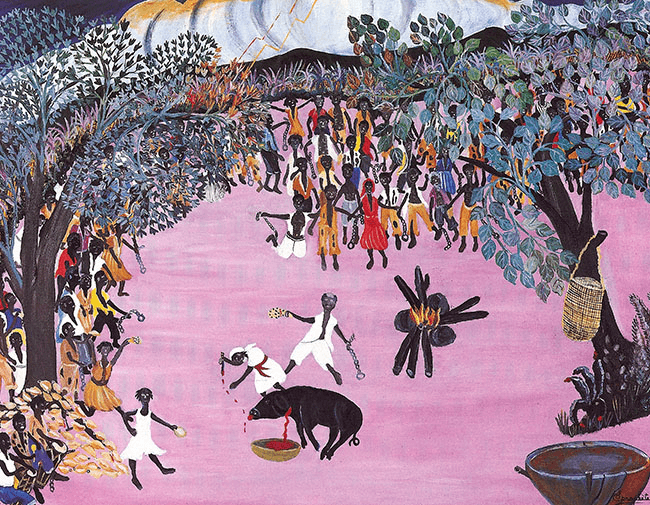
The Bwa Kayiman ceremony that took place in the North of what is now Haiti on August 14, 1791 was a critical event in Haiti’s history. It was held by enslaved Haitians to launch the revolution against slavery and French colonialism, and consisted of a Vodou ceremony and a political meeting. We know that resistance against slavery happened consistently in the daily lives of our ancestors and a number of rebellions took place long before 1791. What sets Bwa Kayiman apart from other collective acts of resistance in Saint Dominique is that it was a planning meeting and religious ceremony that included a solemn vow by those who participated to be free or die fighting for it. Beyond its importance in terms of strategy, it’s one moment in Haitian history from which the collective Haitian imagination to become a nation is drawn, and it is regularly referred to in times of political struggle in present day Haiti.
Despite Bwa Kayiman’s importance in the creation of the Haitian nation, the date and the place have not been elevated by the Haitian state as an official holiday. In a recent lecture on how the Haitian state and civil society has built sites of heritage and collective memory around our history, Haitian Art historian Carlos Celius, described and analyzed that aspect of Haitian identity formulation. Celius explains that the Haitian state has promoted the importance of forts and commemorated dates of battles as national holidays. Bwa Kayiman is simply not elevated to the status of other historic symbols of our independence. August 14th is not a national holiday and it remains a contested site because of its association with Vodou.
Professor Pierre Michel Chery proposed the 12 Prensip Bwa Kayiman, a set of values associated with Bwa Kayiman. People who study Haiti often make reference to them, particularly the first one – Tout Moun Se Moun: Pa gen Moun pase Moun. We had a chance to talk to Professor Chery to understand where the principles come from. Below is a transcription of our conversation with him with some changes for clarity.
Why did you propose the 12 principles of Bwa Kayiman?
The 12 principles of Bwa Kayiman was an answer that came to me in a sense. It came to me in a very particular context in the country in 2009. At the time there was a Protestant pastor who was undertaking a kwazad that centered on demonizing Bwa Kayiman and Cecil Fatima as Jezabel. The event was widely broadcasted by the media and he held it in a large open space with large screens outside so that even passersby could tune in.
What shocked me about this week-long kwazad was how the pastor treated someone like Cecil Fatima and Bwa Kayiman. Bwa Kayiman is a part of the founding of Haiti. I was shocked that no intellectual, not one ethnographer, nor anthropologist had responded to such a negative discourse on the very foundation of Haitian society.
This indifference from the intellectual community was unacceptable. It felt like an interpellation. There is a saying that goes, if you notice that there's something to be done and there’s no one else to do it, you should do it yourself.
From there, I had already been exploring subject matter pertaining to what makes the strength of the Haitian peasantry. That same night, I drew from this work and was able to find the links between the life philosophies of the Haitian peasantry and the 12 principles of Bwa Kayiman.

Painting of Bwa Kayiman Ceremony by Nicole Jean-Louis
What methodology did you use to pick the 12 principles that you chose?
The methodology was largely observational. I did not immerse myself but observed, collected data and then went off to interpret these observations. That said, I am part of the peasantry myself and know their habits. When you ask them questions, they assess you and will give you an answer based on their assessment of you – what you look like to them.
My interest peaked on the subject after hearing a person from the peasantry say, “Depi m gen manje pou m manje” – boiling life and necessities down to the issue of food which is all about survival. That means, a Haitian peasant is a person – and all of Haitian history supports this – who is prepared to live with the absolute minimum of what is vital for survival. We have to add to this minimum, because it cannot stay at the level of food. It has to be brought to the level of what a Haitian person needs to live.
This distinction highlights a major difference between a capitalist society where people need to make money, and a society where people just want to make it through life with the minimum of what life has to offer them, without the need for accumulation. This was the first aspect of my work.
From there we essentially discover that the philosophy of the peasantry should be associated with Bwa Kayiman because it can make the difference for us as a society, for us as an existence project if you will.
Which principle do you think would be helpful to get the country out of this crisis?
Veye! Lènmi Bwa Kayiman ap vin sou tout kalite non, ak tout kalite rechany ... Watch out! The Bwa Kayiman’s enemies will come under all types of names, in all types of clothing...
12 Prensip Bwa Kayiman
Based on my experience, everyone who reads the principles, likes and integrates them, finds one principle that becomes fundamental to them. There are people who like the principle “Pa Lage Chay Nan Men Manfouben” and live by it. One ethnographer friend of mine told me he does not make any important decisions without consulting this principle. Another says “Chak Moun Gen Fason Pa Li Pou Li Lapriyè” led her to accept her calling as a manbo and now she is one of the most powerful manbos in the country. They speak to people based on their journey.
Now if I were to choose which principles would help us out of this crisis, they would be the very first principle, ”Pa Gen Moun Pase Moun'' and the principle that goes with it “Si Gen Pou Youn Gen Pou De”. They are fundamental to Haitian life. And, all of the difficulties we live come out of the contradictions that exist with the ”Pa Gen Moun Pase Moun” principle and the apartheid society that emerged from colonization.
To understand this apartheid society, we must square the principles of Bwa Kayiman with Article 59 of the 1685 Code noir. This article concerns the free blacks who began fighting to change the system before the revolt. They were fighting for their interest, so that they could have the same rights as the whites using Article 59.
It was on the basis of this Article that they were fighting and it is with it that they were making their demands to the French. In that same article, they did not see the question of liberty for all. And that’s where Bwa Kayiman comes in.
It offered liberty for all, and established the principle of ”Pa Gen Moun Pase Moun”. Meaning a white person cannot be superior to a black person. What makes you a person is what you have inside and what you contribute to life, not the color of your skin. These two principles are fundamental and you will find political organizations that have adopted these principles as slogans. Particularly the former. And with these principles we can build another society where we have a state that considers the needs of all citizens in the country, with respect for one another and in consideration of “Chak Moun Gen Fason Pa Li Pou Li Lapriyè”.
12 Prensip Bwa Kayiman
Tout moun se moun. Pa gen moun pase moun. All people are human. No person is better than another (or is more human than another).
Tout moun gen plas yo anba syèl ble a. Everyone has their place under the blue sky.
Si gen pou youn gen pou de. If there is enough for one, there is enough for two.
Chak moun gen fason pa li pou li lapriyè. Respekte fason chak moun lapriyè… Everyone has their own way to pray. Respect how everyone prays.
Sa nou pa konnen pi gran pase nou. What we do not know is greater than us.
_Nan pwen anyen nan lavi a ki pa gen règleman. Se règleman ki bay lavi a ekilib._ There is nothing in life without a law. Law gives life balance.
Pa defèt ekilib lavi a san rezon. Moun, ki mal deplase eleman yo, ap rale malè sou tout moun. Do not displace life's balance without reason.
Tank n ap aprann, se tank n ap konnen kòman pou nou respekte ekilib lavi a. The more we learn, the more we will understand how to respect life's balance.
Pa janm manje manje bliye. Never forget things easily.
Toujou sonje: fè koupe fè; dèyè mòn gen mòn; pa fè san inosan koule; pa lage chay nan men manfouben. Always remember: no matter how tough you are, there is always someone tougher; there are more mountains behind mountains; do not shed the blood of innocents; do not have careless people bear responsibility.
Veye! Lènmi Bwa Kayiman ap vin sou tout kalite non, ak tout kalite rechany pou yo tire revany. Watch out! The Bwa Kayiman’s enemies will come under all types of names, in all types of clothing for revenge.
Malè yon eritye ki bliye esklav fè Bwa Kayiman pou moun k ap sèvi Bondye pa lote moun nan mitan bèt. Shame on the heir who forgets that slaves made Bwa Kayiman so that people who are serving God may may never again be put in packs among animals.
Featured Images: The Black Atlantic Principle translations: Potomitan.info
Sep 22, 2022
Do you know the 12 principles of Bwa Kayiman? A conversation with Professor Pierre Michel Chery


"The 12 principles of Bwa Kayiman was an answer that came to me..."
Professor Pierre Michel Chery
The Bwa Kayiman ceremony that took place in the North of what is now Haiti on August 14, 1791 was a critical event in Haiti’s history. It was held by enslaved Haitians to launch the revolution against slavery and French colonialism, and consisted of a Vodou ceremony and a political meeting. We know that resistance against slavery happened consistently in the daily lives of our ancestors and a number of rebellions took place long before 1791. What sets Bwa Kayiman apart from other collective acts of resistance in Saint Dominique is that it was a planning meeting and religious ceremony that included a solemn vow by those who participated to be free or die fighting for it. Beyond its importance in terms of strategy, it’s one moment in Haitian history from which the collective Haitian imagination to become a nation is drawn, and it is regularly referred to in times of political struggle in present day Haiti.
Despite Bwa Kayiman’s importance in the creation of the Haitian nation, the date and the place have not been elevated by the Haitian state as an official holiday. In a recent lecture on how the Haitian state and civil society has built sites of heritage and collective memory around our history, Haitian Art historian Carlos Celius, described and analyzed that aspect of Haitian identity formulation. Celius explains that the Haitian state has promoted the importance of forts and commemorated dates of battles as national holidays. Bwa Kayiman is simply not elevated to the status of other historic symbols of our independence. August 14th is not a national holiday and it remains a contested site because of its association with Vodou.
Professor Pierre Michel Chery proposed the 12 Prensip Bwa Kayiman, a set of values associated with Bwa Kayiman. People who study Haiti often make reference to them, particularly the first one – Tout Moun Se Moun: Pa gen Moun pase Moun. We had a chance to talk to Professor Chery to understand where the principles come from. Below is a transcription of our conversation with him with some changes for clarity.
Why did you propose the 12 principles of Bwa Kayiman?
The 12 principles of Bwa Kayiman was an answer that came to me in a sense. It came to me in a very particular context in the country in 2009. At the time there was a Protestant pastor who was undertaking a kwazad that centered on demonizing Bwa Kayiman and Cecil Fatima as Jezabel. The event was widely broadcasted by the media and he held it in a large open space with large screens outside so that even passersby could tune in.
What shocked me about this week-long kwazad was how the pastor treated someone like Cecil Fatima and Bwa Kayiman. Bwa Kayiman is a part of the founding of Haiti. I was shocked that no intellectual, not one ethnographer, nor anthropologist had responded to such a negative discourse on the very foundation of Haitian society.
This indifference from the intellectual community was unacceptable. It felt like an interpellation. There is a saying that goes, if you notice that there's something to be done and there’s no one else to do it, you should do it yourself.
From there, I had already been exploring subject matter pertaining to what makes the strength of the Haitian peasantry. That same night, I drew from this work and was able to find the links between the life philosophies of the Haitian peasantry and the 12 principles of Bwa Kayiman.

Painting of Bwa Kayiman Ceremony by Nicole Jean-Louis
What methodology did you use to pick the 12 principles that you chose?
The methodology was largely observational. I did not immerse myself but observed, collected data and then went off to interpret these observations. That said, I am part of the peasantry myself and know their habits. When you ask them questions, they assess you and will give you an answer based on their assessment of you – what you look like to them.
My interest peaked on the subject after hearing a person from the peasantry say, “Depi m gen manje pou m manje” – boiling life and necessities down to the issue of food which is all about survival. That means, a Haitian peasant is a person – and all of Haitian history supports this – who is prepared to live with the absolute minimum of what is vital for survival. We have to add to this minimum, because it cannot stay at the level of food. It has to be brought to the level of what a Haitian person needs to live.
This distinction highlights a major difference between a capitalist society where people need to make money, and a society where people just want to make it through life with the minimum of what life has to offer them, without the need for accumulation. This was the first aspect of my work.
From there we essentially discover that the philosophy of the peasantry should be associated with Bwa Kayiman because it can make the difference for us as a society, for us as an existence project if you will.
Which principle do you think would be helpful to get the country out of this crisis?
Veye! Lènmi Bwa Kayiman ap vin sou tout kalite non, ak tout kalite rechany ... Watch out! The Bwa Kayiman’s enemies will come under all types of names, in all types of clothing...
12 Prensip Bwa Kayiman
Based on my experience, everyone who reads the principles, likes and integrates them, finds one principle that becomes fundamental to them. There are people who like the principle “Pa Lage Chay Nan Men Manfouben” and live by it. One ethnographer friend of mine told me he does not make any important decisions without consulting this principle. Another says “Chak Moun Gen Fason Pa Li Pou Li Lapriyè” led her to accept her calling as a manbo and now she is one of the most powerful manbos in the country. They speak to people based on their journey.
Now if I were to choose which principles would help us out of this crisis, they would be the very first principle, ”Pa Gen Moun Pase Moun'' and the principle that goes with it “Si Gen Pou Youn Gen Pou De”. They are fundamental to Haitian life. And, all of the difficulties we live come out of the contradictions that exist with the ”Pa Gen Moun Pase Moun” principle and the apartheid society that emerged from colonization.
To understand this apartheid society, we must square the principles of Bwa Kayiman with Article 59 of the 1685 Code noir. This article concerns the free blacks who began fighting to change the system before the revolt. They were fighting for their interest, so that they could have the same rights as the whites using Article 59.
It was on the basis of this Article that they were fighting and it is with it that they were making their demands to the French. In that same article, they did not see the question of liberty for all. And that’s where Bwa Kayiman comes in.
It offered liberty for all, and established the principle of ”Pa Gen Moun Pase Moun”. Meaning a white person cannot be superior to a black person. What makes you a person is what you have inside and what you contribute to life, not the color of your skin. These two principles are fundamental and you will find political organizations that have adopted these principles as slogans. Particularly the former. And with these principles we can build another society where we have a state that considers the needs of all citizens in the country, with respect for one another and in consideration of “Chak Moun Gen Fason Pa Li Pou Li Lapriyè”.
12 Prensip Bwa Kayiman
Tout moun se moun. Pa gen moun pase moun. All people are human. No person is better than another (or is more human than another).
Tout moun gen plas yo anba syèl ble a. Everyone has their place under the blue sky.
Si gen pou youn gen pou de. If there is enough for one, there is enough for two.
Chak moun gen fason pa li pou li lapriyè. Respekte fason chak moun lapriyè… Everyone has their own way to pray. Respect how everyone prays.
Sa nou pa konnen pi gran pase nou. What we do not know is greater than us.
_Nan pwen anyen nan lavi a ki pa gen règleman. Se règleman ki bay lavi a ekilib._ There is nothing in life without a law. Law gives life balance.
Pa defèt ekilib lavi a san rezon. Moun, ki mal deplase eleman yo, ap rale malè sou tout moun. Do not displace life's balance without reason.
Tank n ap aprann, se tank n ap konnen kòman pou nou respekte ekilib lavi a. The more we learn, the more we will understand how to respect life's balance.
Pa janm manje manje bliye. Never forget things easily.
Toujou sonje: fè koupe fè; dèyè mòn gen mòn; pa fè san inosan koule; pa lage chay nan men manfouben. Always remember: no matter how tough you are, there is always someone tougher; there are more mountains behind mountains; do not shed the blood of innocents; do not have careless people bear responsibility.
Veye! Lènmi Bwa Kayiman ap vin sou tout kalite non, ak tout kalite rechany pou yo tire revany. Watch out! The Bwa Kayiman’s enemies will come under all types of names, in all types of clothing for revenge.
Malè yon eritye ki bliye esklav fè Bwa Kayiman pou moun k ap sèvi Bondye pa lote moun nan mitan bèt. Shame on the heir who forgets that slaves made Bwa Kayiman so that people who are serving God may may never again be put in packs among animals.
Featured Images: The Black Atlantic Principle translations: Potomitan.info
Sep 22, 2022
Safeguarding our Cultural Heritage: Quisqueya University’s Cultural Conservation Center


“Our cultural artifacts serve as a testimony of our identity as a people. It is imperative that we save and conserve our cultural heritage because it drives us to hope and anchors us in who we are. If we don’t preserve our cultural artifacts, we will lose bits of who we are. Each generation will pass, and there will not be any link from one generation to the next.”
- Erntz Jeudy
Sitting down with the lead art conservator, Erntz Jeudy, at University Quisqueya’s Cultural Conservation Center (Centre de Conservation de Bien Culturels, CCC) was an eye-opening experience. Art conservation is seldom discussed in our day-to-day life, though its role is pivotal in preserving our history and identity. Jeudy, a slim astute gentleman enthusiastically shared about his work as an art conservator–a rare trade within the creative space in Haiti– the history of Haiti’s leading cultural conservation center, and what motivates him to continue this work in such a tough environment.
January 12th, 2010 is the day all Haitians will never forget. The disastrous earthquake of 2010 not only took with it so many of our loved ones, but also damaged thousands of archives, collections of artworks, and artifacts that have shaped our cultural heritage for centuries. These artifacts do not simply document our people's history but reflect our values of dignity, freedom, self-reliance, community, faith, and creativity.
The Cultural Conservation Center (CCC) was initially set up as part of a bigger project the Haiti Cultural Recovery Project by the Smithsonian Institution (SI) in partnership with the Haitian government in an effort to preserve the many cultural artifacts heavily damaged after the events of January 12th. Within the first few years, the Smithsonian and its partners saved and treated over 30,000 paintings, sculptures, artifacts, rare books, murals, and archival artifacts and trained over 100 Haitians in basic art conservation work. Initially housed downtown Port-au- Prince in a former U.N. building by the summer of June 2015, a permanent conservation center was inaugurated at University Quisqueya. This was made possible by the generous support of University Quisqueya, the Smithsonian, USAID, and the Stiller Foundation.
Following the inauguration of the center at the university in 2015, the center was led by Franck Louissaint. Frank Louissaint, an acclaimed artist, and teacher, was one of the first generations of artists in Haiti to specialize in art conservation. After his passing in 2021, Mr. Erntz Jeudy, a faithful mentee and student of Franck Louissaint went on to follow in his footsteps. The CCC team of art conservators is four people strong and currently includes Mr. Erntz Jeudy, Mr. Richard Ruthger, Mr. Marc Gérard Estimé, and Mr. Godson Antoine.

Mr. Jeudy went on to explain his ongoing love and commitment to this work.
"My life wouldn’t have real meaning if I did not contribute to preserving our culture, our identity... I love what I do because I love myself. I love myself because I love my origins. Loving my origins means that I love my country. To say I love my country means I love my story, our history, and our identity. For this work to have meaning, for me, it is because of these testimonies, these artifacts. I will also pass on, but these will remain. This work is not only for this generation but for generations to come.”
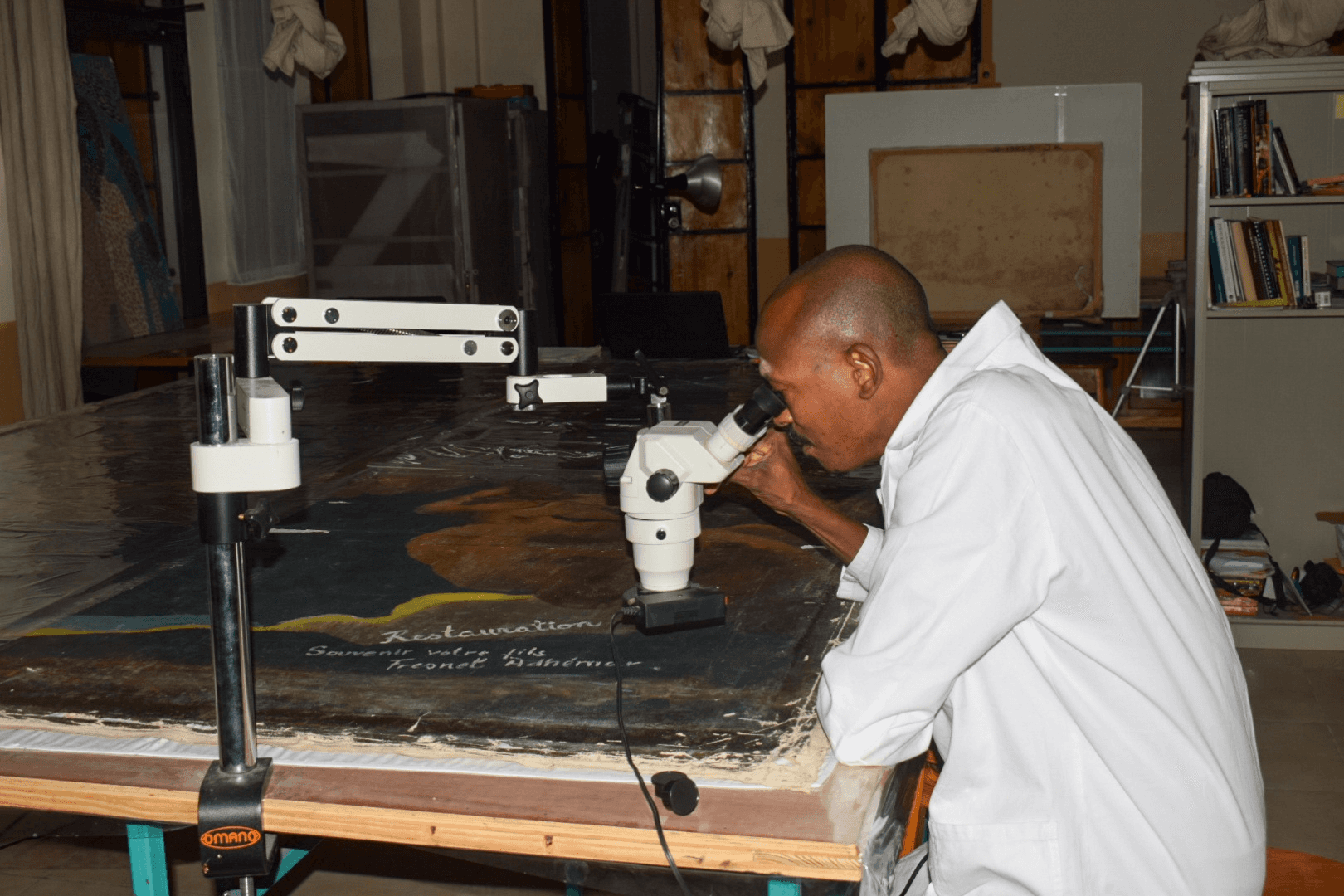
Mr. Jeudy continues to work on various pieces across the country, restoring artifacts dating over 200 years, such as the restoration of the Palais Sans Souci painting by Numa Desroches from 1818. The process undertaken for each artifact is a delicate one, often spanning months of focused attention dependent on its level of deterioration. Each piece shares its own story and requires varying degrees of intervention. Jeudy’s team focuses on preserving the original work.
Many steps are employed in the restoring process, and this can include cleaning, repairing, and, oftentimes, removing old restoration attempts. This was the case with the life-sized painting titled Ascension that came from the Cathedral of Cap Haitian. This masterpiece had undergone restoration in the past, disfiguring the original work and altering the piece’s integrity. Mr. Jeudy explained that as a conservator, you often must wear many hats and work with great detail. Their intention is to improve the condition of the work by stabilizing physical problems and addressing any surface disfigurement arising from deterioration or damage.

Recurring natural disasters, persistent socio-economic instability, and ongoing political instability force Haitians to survive in very difficult circumstances. Prioritizing our basic needs, we often forget just how important cultural expression throughout our history has been to our survival. The reality is that, throughout the hardships that we have lived through, we never forget our culture in times of uncertainty. Instead, we take refuge in it. We pray harder, sing louder and hold on tighter to each other. Art serves as a mechanism to preserve our identity and cultural expression.
The CCC is designed as a space for exchange, training, research, exhibition, and discussion of ideas on the place and role of culture in economic development. Today, the center is doing the work of commissioning pieces from all over the country and is currently working to extract art damaged by the August 2021 earthquake in the southern departments of Haiti.
If you are interested in learning more about their work please visit https://uniq.edu.ht/ccc/presentation/
Photos by Cassendy Lafond
Jun 18, 2022
Safeguarding our Cultural Heritage: Quisqueya University’s Cultural Conservation Center


“Our cultural artifacts serve as a testimony of our identity as a people. It is imperative that we save and conserve our cultural heritage because it drives us to hope and anchors us in who we are. If we don’t preserve our cultural artifacts, we will lose bits of who we are. Each generation will pass, and there will not be any link from one generation to the next.”
- Erntz Jeudy
Sitting down with the lead art conservator, Erntz Jeudy, at University Quisqueya’s Cultural Conservation Center (Centre de Conservation de Bien Culturels, CCC) was an eye-opening experience. Art conservation is seldom discussed in our day-to-day life, though its role is pivotal in preserving our history and identity. Jeudy, a slim astute gentleman enthusiastically shared about his work as an art conservator–a rare trade within the creative space in Haiti– the history of Haiti’s leading cultural conservation center, and what motivates him to continue this work in such a tough environment.
January 12th, 2010 is the day all Haitians will never forget. The disastrous earthquake of 2010 not only took with it so many of our loved ones, but also damaged thousands of archives, collections of artworks, and artifacts that have shaped our cultural heritage for centuries. These artifacts do not simply document our people's history but reflect our values of dignity, freedom, self-reliance, community, faith, and creativity.
The Cultural Conservation Center (CCC) was initially set up as part of a bigger project the Haiti Cultural Recovery Project by the Smithsonian Institution (SI) in partnership with the Haitian government in an effort to preserve the many cultural artifacts heavily damaged after the events of January 12th. Within the first few years, the Smithsonian and its partners saved and treated over 30,000 paintings, sculptures, artifacts, rare books, murals, and archival artifacts and trained over 100 Haitians in basic art conservation work. Initially housed downtown Port-au- Prince in a former U.N. building by the summer of June 2015, a permanent conservation center was inaugurated at University Quisqueya. This was made possible by the generous support of University Quisqueya, the Smithsonian, USAID, and the Stiller Foundation.
Following the inauguration of the center at the university in 2015, the center was led by Franck Louissaint. Frank Louissaint, an acclaimed artist, and teacher, was one of the first generations of artists in Haiti to specialize in art conservation. After his passing in 2021, Mr. Erntz Jeudy, a faithful mentee and student of Franck Louissaint went on to follow in his footsteps. The CCC team of art conservators is four people strong and currently includes Mr. Erntz Jeudy, Mr. Richard Ruthger, Mr. Marc Gérard Estimé, and Mr. Godson Antoine.

Mr. Jeudy went on to explain his ongoing love and commitment to this work.
"My life wouldn’t have real meaning if I did not contribute to preserving our culture, our identity... I love what I do because I love myself. I love myself because I love my origins. Loving my origins means that I love my country. To say I love my country means I love my story, our history, and our identity. For this work to have meaning, for me, it is because of these testimonies, these artifacts. I will also pass on, but these will remain. This work is not only for this generation but for generations to come.”
Mr. Jeudy continues to work on various pieces across the country, restoring artifacts dating over 200 years, such as the restoration of the Palais Sans Souci painting by Numa Desroches from 1818. The process undertaken for each artifact is a delicate one, often spanning months of focused attention dependent on its level of deterioration. Each piece shares its own story and requires varying degrees of intervention. Jeudy’s team focuses on preserving the original work.
Many steps are employed in the restoring process, and this can include cleaning, repairing, and, oftentimes, removing old restoration attempts. This was the case with the life-sized painting titled Ascension that came from the Cathedral of Cap Haitian. This masterpiece had undergone restoration in the past, disfiguring the original work and altering the piece’s integrity. Mr. Jeudy explained that as a conservator, you often must wear many hats and work with great detail. Their intention is to improve the condition of the work by stabilizing physical problems and addressing any surface disfigurement arising from deterioration or damage.

Recurring natural disasters, persistent socio-economic instability, and ongoing political instability force Haitians to survive in very difficult circumstances. Prioritizing our basic needs, we often forget just how important cultural expression throughout our history has been to our survival. The reality is that, throughout the hardships that we have lived through, we never forget our culture in times of uncertainty. Instead, we take refuge in it. We pray harder, sing louder and hold on tighter to each other. Art serves as a mechanism to preserve our identity and cultural expression.
The CCC is designed as a space for exchange, training, research, exhibition, and discussion of ideas on the place and role of culture in economic development. Today, the center is doing the work of commissioning pieces from all over the country and is currently working to extract art damaged by the August 2021 earthquake in the southern departments of Haiti.
If you are interested in learning more about their work please visit https://uniq.edu.ht/ccc/presentation/
Photos by Cassendy Lafond
Jun 18, 2022
Alcibiade and the Haitian Comedic Heritage


This post was originally written in Kreyòl.
Sunday seemed to be a sacred day for Alcibiade: a day for one last prayer, a day to sing one’s libera, a day to live life to the fullest.
Actor and comedian Alcibiade, born Nicolas Pierre Rolin, was an actor from the National Theater, back when its name was Théâtre de Verdure. He spent more than 25 years producing Détente Théâtrale, a popular Haitian radio comedy series which aired on Radio Télévision Caraïbes every Sunday. His unfortunate passing was made known to the public on Sunday, January 23, 2022 although he had passed away two days prior. Sunday seemed to be a sacred day for Alcibiade: a day for one last prayer, a day to sing one’s libera, a day to live life to the fullest.
Alcibiade began producing Détente Théâtrale in 1994 on Radio Caraïbes. According to René Antoine Lerebours, producer of many Alcibiade sitcom episodes, in 2016, they stopped producing new episodes due to Rolin's health issues. Since then, only reruns of the show are played on 94.5 FM.
Many young people can recall waking up on Sundays to their parents listening to Alcibiade. My own father made a ritual of sitting right in front of his radio to listen to either a new episode of Détente Théâtrale or a rerun on 94.5 FM. Along with many folks in our neighborhood called Fort Mercredi, it was a weekly rendez-vous, and my father would rush home to be there every Sunday after church.
On many Facebook posts, you can read moving testimonies about Alcibiade. Eberline Nicolas, a journalist for Loop Haïti, shared the following words, "When I was a child, every Sunday, this man’s voice let me know food was ready. I enjoyed listening to him because I loved the food that was made on Sundays. Safe travels Biade." I recall similarly allowing Alcibiade's sitcom to help me pass the time while waiting for food to be served on Sundays. It is as if entertainment is able to suppress all dire needs we might have. Alcibiade's sitcoms were not only able to make us laugh, they were also able to make us forget our urgent needs, even our impatient bellies awaiting a delicious Sunday meal.
In addition to providing laughter and entertainment, Détente Theatrale helped us think about social realities. The character named Alcibiade is one that is always hustling. You could say he was a wise-guy or a trickster. He is comparable to Malice of the Haitian tales, "Bouki et Malice."
In Haiti nowadays, traditional media (television and radio stations) produces very few artistic programs or any form of entertainment programs such as sitcoms, chronicles and cultural shows. Simply flipping through radio and television channels, this reality is hard to miss. The absence of such programs says a lot about what value the media gives to culture and entertainment. However, this empty space left by traditional media is being filled in alternative spaces mostly found on the internet. Through platforms such as Facebook, Youtube and TikTok, many young women and men are creating programs of all types. We even find consistent trends and standards in these series. We can name a few comedic productions like Jeff Oka, Aurelie, Cantave-K, Gaëlle Bien-Aimé, amongst others. These artists have succeeded in attracting a large and diverse audience.
However, not so long ago in the 1980’s and 1990’s, there used to be many radio and television shows on both private and public media outlets focused on entertainment in Haiti. We can name "Lavi nan Bouk'' by Papa Pyè's theater group, "Languichatte au 20e siècle", which is Theodore Beaubrun's creation, that started playing on public television (TNH) in 1982. "Woy! Les voilà" was a sitcom created by Mona Guérin, which played on Radio Métropole and "Meli Melo", with its main character Dubréus (We all remember the catchy tune for that show). "Pè Toma" was a beloved television series created by Sidney Louis that played on Télévision Nationale (National Television). VIP (Vanités, Intrigues, Passions) was a radio drama that was aired on Radio Métropole. And then there was the beloved "Détente Théâtrale" (Theatrical Relaxation) created by the Alciabiade Theater Group, and is the only sitcom among all those named that continues to be broadcasted on FM radio today.
Why is laughter so important? Laughter is therapeutic, but also possesses a social function. When can we laugh? The passing of a comedian such as Alcibiade could be a great occasion to think on the link between life, laughter, and death. But death is no laughing matter. Even for Alcibiade, a very funny character, who spent more than 40 years making people laugh through his numerous sketches and radio sitcoms, no one would dare crack a smile during this time. Paradoxically, Alcibiade surely created his skits to help us through our toughest moments through laughter, through times like these.
We will never truly know what Alcibiade would have wanted us to do during his funeral. What we can do, however, is take this time of mourning to think of Nicolas Pierre Rolin's heritage to us. We can try and understand the causes behind the absence of sitcoms on the radio and on television, and look at the dynamics of new artists entertaining us via new media. As we wish Alcibiade a good crossing, we also wish for these beautiful artistic practices not to be buried in traditional media in Haïti.
Feb 23, 2022
Alcibiade and the Haitian Comedic Heritage


This post was originally written in Kreyòl.
Sunday seemed to be a sacred day for Alcibiade: a day for one last prayer, a day to sing one’s libera, a day to live life to the fullest.
Actor and comedian Alcibiade, born Nicolas Pierre Rolin, was an actor from the National Theater, back when its name was Théâtre de Verdure. He spent more than 25 years producing Détente Théâtrale, a popular Haitian radio comedy series which aired on Radio Télévision Caraïbes every Sunday. His unfortunate passing was made known to the public on Sunday, January 23, 2022 although he had passed away two days prior. Sunday seemed to be a sacred day for Alcibiade: a day for one last prayer, a day to sing one’s libera, a day to live life to the fullest.
Alcibiade began producing Détente Théâtrale in 1994 on Radio Caraïbes. According to René Antoine Lerebours, producer of many Alcibiade sitcom episodes, in 2016, they stopped producing new episodes due to Rolin's health issues. Since then, only reruns of the show are played on 94.5 FM.
Many young people can recall waking up on Sundays to their parents listening to Alcibiade. My own father made a ritual of sitting right in front of his radio to listen to either a new episode of Détente Théâtrale or a rerun on 94.5 FM. Along with many folks in our neighborhood called Fort Mercredi, it was a weekly rendez-vous, and my father would rush home to be there every Sunday after church.
On many Facebook posts, you can read moving testimonies about Alcibiade. Eberline Nicolas, a journalist for Loop Haïti, shared the following words, "When I was a child, every Sunday, this man’s voice let me know food was ready. I enjoyed listening to him because I loved the food that was made on Sundays. Safe travels Biade." I recall similarly allowing Alcibiade's sitcom to help me pass the time while waiting for food to be served on Sundays. It is as if entertainment is able to suppress all dire needs we might have. Alcibiade's sitcoms were not only able to make us laugh, they were also able to make us forget our urgent needs, even our impatient bellies awaiting a delicious Sunday meal.
In addition to providing laughter and entertainment, Détente Theatrale helped us think about social realities. The character named Alcibiade is one that is always hustling. You could say he was a wise-guy or a trickster. He is comparable to Malice of the Haitian tales, "Bouki et Malice."
In Haiti nowadays, traditional media (television and radio stations) produces very few artistic programs or any form of entertainment programs such as sitcoms, chronicles and cultural shows. Simply flipping through radio and television channels, this reality is hard to miss. The absence of such programs says a lot about what value the media gives to culture and entertainment. However, this empty space left by traditional media is being filled in alternative spaces mostly found on the internet. Through platforms such as Facebook, Youtube and TikTok, many young women and men are creating programs of all types. We even find consistent trends and standards in these series. We can name a few comedic productions like Jeff Oka, Aurelie, Cantave-K, Gaëlle Bien-Aimé, amongst others. These artists have succeeded in attracting a large and diverse audience.
However, not so long ago in the 1980’s and 1990’s, there used to be many radio and television shows on both private and public media outlets focused on entertainment in Haiti. We can name "Lavi nan Bouk'' by Papa Pyè's theater group, "Languichatte au 20e siècle", which is Theodore Beaubrun's creation, that started playing on public television (TNH) in 1982. "Woy! Les voilà" was a sitcom created by Mona Guérin, which played on Radio Métropole and "Meli Melo", with its main character Dubréus (We all remember the catchy tune for that show). "Pè Toma" was a beloved television series created by Sidney Louis that played on Télévision Nationale (National Television). VIP (Vanités, Intrigues, Passions) was a radio drama that was aired on Radio Métropole. And then there was the beloved "Détente Théâtrale" (Theatrical Relaxation) created by the Alciabiade Theater Group, and is the only sitcom among all those named that continues to be broadcasted on FM radio today.
Why is laughter so important? Laughter is therapeutic, but also possesses a social function. When can we laugh? The passing of a comedian such as Alcibiade could be a great occasion to think on the link between life, laughter, and death. But death is no laughing matter. Even for Alcibiade, a very funny character, who spent more than 40 years making people laugh through his numerous sketches and radio sitcoms, no one would dare crack a smile during this time. Paradoxically, Alcibiade surely created his skits to help us through our toughest moments through laughter, through times like these.
We will never truly know what Alcibiade would have wanted us to do during his funeral. What we can do, however, is take this time of mourning to think of Nicolas Pierre Rolin's heritage to us. We can try and understand the causes behind the absence of sitcoms on the radio and on television, and look at the dynamics of new artists entertaining us via new media. As we wish Alcibiade a good crossing, we also wish for these beautiful artistic practices not to be buried in traditional media in Haïti.
Feb 23, 2022
Hands Off Haiti


Any “modicum of stability” foreign intervention brings is at the expense of Haiti’s most vulnerable people.
On June 20th, Jovenel Moise made his first statement addressing the more recent round of fighting going on in Matisan/Fontamara after his trip to Turkey. In it, he said help is required from the international community, but was careful to say that he is not asking for foreign troops to return. Even then that statement was concerning. This prompted me to begin writing this essay, not knowing then that that was Jovenel Moise’s last press conference.
The U.S. occupation which lasted from 1915 - 1934 was a systematic campaign of economic pillage and plunder imposed through violence, resulting in the deaths of fifteen thousand Haitians. US troops came again in 1994 to reinstate Aristide and briefly again after the coup d’etat in 2004. More recently, UN peacekeeping forces have introduced Cholera to Haiti resulting in 10,000 people dead. There were countless credible allegations of rape by the UN soldiers and abandoned children. And this same UN intervention facilitated the propagation of armed gangs in Port-au-Prince and killed many civilians in the raids it waged against gangs, several of them women and children. UN missions don’t just fail in Haiti, this is the case in other countries as well. Often, the solutions implemented are not adapted to the realities on the ground and as the political landscape shifts so does the mission, dragging it out many years. UN missions become increasingly violent and interventionist, no longer only tasked with keeping the peace.
Now that Jovenel Moise is dead, calls for foreign intervention have spiked in the public discourse reflected in the press, face to face conversations and across social media. In response, many Haitians have been vocal about why it’s important to guard against foreign intervention.
We have learned that as of Sunday, the US is considering Claude Joseph’s request. The proponents of foreign intervention for swift elections argue its merits to avoid chaos and for the sake of stability. We know that when disaster strikes, the assumption is that Black people will descend into senseless violence and pillaging. This was the assumption after the earthquake in 2010. However, like after the earthquake, Haitians have largely stayed home following the assassination. As of Friday, businesses were open again and Saturday evening Haitians excitedly watched a beautiful football match.
The reality is the source of chaos is the international community backed PHTK party. Structurally, the Haitian economy and public institutions are being held hostage by economic and political kingmakers. Under PHTK, Haitian institutions which were already weak have accelerated to a stand still. The Ministry of Social Affairs has not functioned in many months, the courts were shut down due to a strike, the health system was in tatters even before Corona hit. The Cour des Comptes’ power has been gutted. Haitian’s purchasing power has dropped under PHTK and 4 million people are in dire need of food. According to economist Fritz Jean, Haitians lose $45 million from remittances from the diaspora due to the gap between the BRH’s exchange rate and how much people actually receive when they need dollars.
The security situation was already untenable under Moise. We experienced over 1000 kidnappings in 2020, and now witness them together in a collective morbid watch party on social media. Politically motivated massacres have become commonplace and the tragic failed operation by the police in Vilaj Dedye laid bare the PNH’s limits to protect Haitian people and its own police.
This situation of chaos caused by the PHTK form of governance brought the public institutions to a halt, offering the government a chance to shore up its power and forge ahead with a referendum for a new constitution that makes the president and ministers above the law during and after their terms. This is the chaos which a foreign intervention would seal into place, because we know PHTK is not able to conduct a free and fair elections.
Questioning these knee-jerk proposals by observing the reality of Haitian lives under PHTK over the past decade also defends against discourse that eulogizes Jovenel Moise and make him a martyr. The haste with which such calls for boots on the ground does not give Haitians the time to figure out what really happened with Moise’s death and what political settlement could be formed. That is going to take time. Instead, Haitians have found ourselves being rushed by the international community while conflicting ambitions for power abound; a consensus is unlikely.
Professor Joy James explains that discourse on liberation movements that is grounded in the actual material wellbeing of the people and concrete resistance to state violence meets opposition in places where knowledge is produced (academia, the media etc). This is because these institutions are propped up by state and private capital. This is why calls for occupation are so shortsighted, like in a recent disappointing Washington Post editorial. The liberation and agency of the Haitian people are abstractions that do not matter and well worth the pains endured for a “modicum of stability.”
We can discuss the damage this death means for the presidency just as the other branches have been systematically dismantled by Jovenel. But the grievances against Moise and PHTK were based on real suffering, corruption, kidnapping, food insecurity and gang violence. There is an aim to keep people from thinking critically to maintain the status quo. Given all that we know about previous foreign intervention, we understand that this “modicum of stability” comes at the expense of Haiti’s most vulnerable people. Let us not repeat the same mistakes.
Woy can't do this work without you! Consider becoming a patron of our Patreon to help support this publication. And subscribe to our weekly newsletter to keep up with notable news about Haiti and her dyaspora.
feature image via haitiliberte.com
Jul 16, 2021
Hands Off Haiti


Any “modicum of stability” foreign intervention brings is at the expense of Haiti’s most vulnerable people.
On June 20th, Jovenel Moise made his first statement addressing the more recent round of fighting going on in Matisan/Fontamara after his trip to Turkey. In it, he said help is required from the international community, but was careful to say that he is not asking for foreign troops to return. Even then that statement was concerning. This prompted me to begin writing this essay, not knowing then that that was Jovenel Moise’s last press conference.
The U.S. occupation which lasted from 1915 - 1934 was a systematic campaign of economic pillage and plunder imposed through violence, resulting in the deaths of fifteen thousand Haitians. US troops came again in 1994 to reinstate Aristide and briefly again after the coup d’etat in 2004. More recently, UN peacekeeping forces have introduced Cholera to Haiti resulting in 10,000 people dead. There were countless credible allegations of rape by the UN soldiers and abandoned children. And this same UN intervention facilitated the propagation of armed gangs in Port-au-Prince and killed many civilians in the raids it waged against gangs, several of them women and children. UN missions don’t just fail in Haiti, this is the case in other countries as well. Often, the solutions implemented are not adapted to the realities on the ground and as the political landscape shifts so does the mission, dragging it out many years. UN missions become increasingly violent and interventionist, no longer only tasked with keeping the peace.
Now that Jovenel Moise is dead, calls for foreign intervention have spiked in the public discourse reflected in the press, face to face conversations and across social media. In response, many Haitians have been vocal about why it’s important to guard against foreign intervention.
We have learned that as of Sunday, the US is considering Claude Joseph’s request. The proponents of foreign intervention for swift elections argue its merits to avoid chaos and for the sake of stability. We know that when disaster strikes, the assumption is that Black people will descend into senseless violence and pillaging. This was the assumption after the earthquake in 2010. However, like after the earthquake, Haitians have largely stayed home following the assassination. As of Friday, businesses were open again and Saturday evening Haitians excitedly watched a beautiful football match.
The reality is the source of chaos is the international community backed PHTK party. Structurally, the Haitian economy and public institutions are being held hostage by economic and political kingmakers. Under PHTK, Haitian institutions which were already weak have accelerated to a stand still. The Ministry of Social Affairs has not functioned in many months, the courts were shut down due to a strike, the health system was in tatters even before Corona hit. The Cour des Comptes’ power has been gutted. Haitian’s purchasing power has dropped under PHTK and 4 million people are in dire need of food. According to economist Fritz Jean, Haitians lose $45 million from remittances from the diaspora due to the gap between the BRH’s exchange rate and how much people actually receive when they need dollars.
The security situation was already untenable under Moise. We experienced over 1000 kidnappings in 2020, and now witness them together in a collective morbid watch party on social media. Politically motivated massacres have become commonplace and the tragic failed operation by the police in Vilaj Dedye laid bare the PNH’s limits to protect Haitian people and its own police.
This situation of chaos caused by the PHTK form of governance brought the public institutions to a halt, offering the government a chance to shore up its power and forge ahead with a referendum for a new constitution that makes the president and ministers above the law during and after their terms. This is the chaos which a foreign intervention would seal into place, because we know PHTK is not able to conduct a free and fair elections.
Questioning these knee-jerk proposals by observing the reality of Haitian lives under PHTK over the past decade also defends against discourse that eulogizes Jovenel Moise and make him a martyr. The haste with which such calls for boots on the ground does not give Haitians the time to figure out what really happened with Moise’s death and what political settlement could be formed. That is going to take time. Instead, Haitians have found ourselves being rushed by the international community while conflicting ambitions for power abound; a consensus is unlikely.
Professor Joy James explains that discourse on liberation movements that is grounded in the actual material wellbeing of the people and concrete resistance to state violence meets opposition in places where knowledge is produced (academia, the media etc). This is because these institutions are propped up by state and private capital. This is why calls for occupation are so shortsighted, like in a recent disappointing Washington Post editorial. The liberation and agency of the Haitian people are abstractions that do not matter and well worth the pains endured for a “modicum of stability.”
We can discuss the damage this death means for the presidency just as the other branches have been systematically dismantled by Jovenel. But the grievances against Moise and PHTK were based on real suffering, corruption, kidnapping, food insecurity and gang violence. There is an aim to keep people from thinking critically to maintain the status quo. Given all that we know about previous foreign intervention, we understand that this “modicum of stability” comes at the expense of Haiti’s most vulnerable people. Let us not repeat the same mistakes.
Woy can't do this work without you! Consider becoming a patron of our Patreon to help support this publication. And subscribe to our weekly newsletter to keep up with notable news about Haiti and her dyaspora.
feature image via haitiliberte.com
Jul 16, 2021
Hands Off Haiti


Jul 16, 2021
CONTACT
CONTACT
CONTACT