
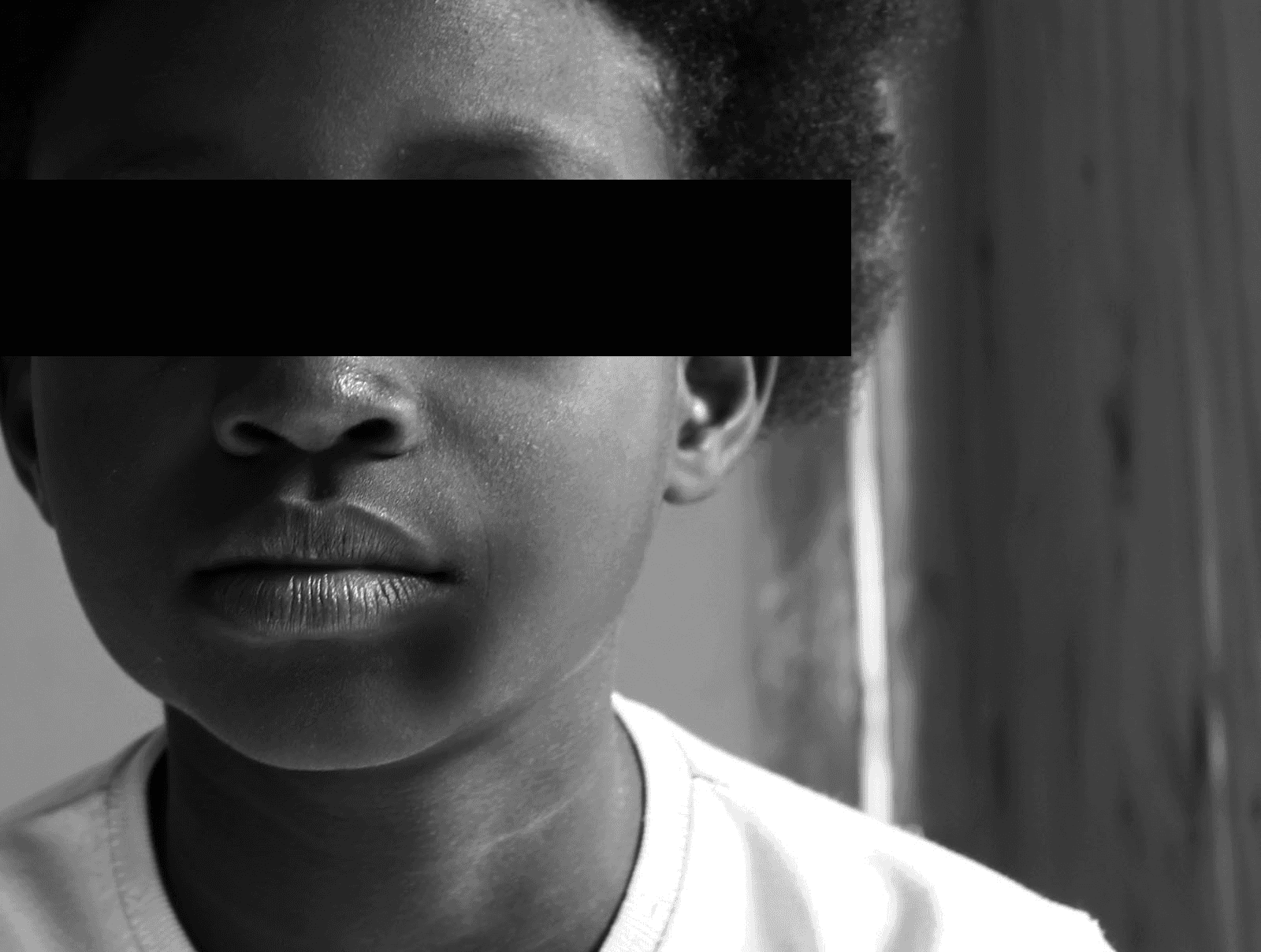

I have vivid memories of being awaken in the middle of the night with kout rigwaz right down my spine because I didn’t bring home the grades expected.
Growing up in any Haitian household, one is likely to have had some form of excessive corporal punishment imposed on them as a child. Haitian parents are known for doing the wrong things with the right intentions when it comes to discipline. Most Haitian parents feel that baton will fix the negative behaviors of their children. I have vivid memories of being awaken in the middle of the night with kout rigwaz right down my spine because I didn’t bring home the grades expected. Days following those beatings, my school uniform would always get stuck to my marks and bruises causing more pain. I also recall being left ajenou or kneeling for hours with two big rocks in each hand in the middle of a Saturday afternoon on the dry, hot concrete. Now that I work in child welfare, I can’t help but to wonder about the true definition of abuse. Can Haitian corporal punishment be seen as abuse in the U.S. or even in Haiti? What is your definition of abuse?
Child abuse is defined as, "Any recent act or failure to act on the part of a parent or caretaker which results in death, serious physical or emotional harm, sexual abuse or exploitation"; or "An act or failure to act which presents an imminent risk of serious harm." This definition of child abuse and neglect refers specifically to parents and other caregivers. A "child" under this definition generally means a person who is younger than age 18 or who is not an emancipated minor. Based on that definition, can we say that most of us Haitians have been abused in some way shape or form? More than ever before, we are seeing an increase in the population of Haitian children entering the foster care system for allegations of abuse, neglect or abandonment. Such increase is due to lack of education, and lack of knowledge of appropriate disciplining methods.
There are four types of parenting styles: Authoritarian, Authoritative, Permissive, and Uninvolved. In the Haitian community, we lean more towards the Authoritarian parenting style. Authoritarian parenting styles generally lead to children who are obedient and proficient, but they rank lower in happiness, social competence and self-esteem. How many of us can honestly say that the punishments imposed on us as children have left us with no signs of anxiety or posttraumatic stress disorder? As I come across the Haitian American Productions videos, the comments from every viewer are so similar, it is as if our parents all sat in the same parenting course. Mom and dad get in a verbal or physical altercation, a Haitian child is bound to get a beating out of rage. You didn’t put the meat out to be thawed out before they get home from work, you are bound to get a beating or yelled at. You are left in charge of your younger siblings as the oldest, and one of the children misbehave, you get disciplined instead. You don’t come home on time for curfew, you get a whooping. If you don’t earn A’s and B’s you get a spanking. If your room is a mess, you get a beating. As depicted in some of the videos, some parents will find an excuse to give you a beating because they have had a bad day at work. Now we are a culture of people where “what happens in this house, stays in this house.” Fortunately, laws in the US put children under the radar of teachers, bus drivers, nurses and after care specialists. In the event, any visible marks and bruises are suspicious of abuse; an abuse report is then called in because everyone is a mandated reporter.
Many Haitians are under the impression that sexual abuse is an “American thing”, when in fact sexual abuse in our culture is almost as prevalent as the U.S.; the only difference is we don’t talk about it.
The common allegations in cases involving Haitians generally involve physical abuse, sexual abuse, and domestic violence. Sexual Abuse is a common one for multiple reasons. For one, it is a cultural taboo. Sex is such a sensitive topic that we fail our children over and over. We fail them by not teaching them that they should not be touched in any body parts that make them feel uncomfortable. We fail them by not listening to them, and when we do listen, we doubt it and don’t believe them. The perpetrator is oftentimes, a family member or friend of the family. They are usually someone that the children trust. Parents do not establish boundaries between their children and adult family members; we allow girls to sit on uncle's laps while developing into womanhood, or share bedrooms with older cousins or friends visiting from Haiti. These are all avenues where a child can begin to be groomed to be molested. Many Haitians are under the impression that sexual abuse is an “American thing”, when in fact sexual abuse in our culture is almost as prevalent as the U.S.; the only difference is we don’t talk about it.
We live in a society where disruptive behaviors in early childhood (including oppositional, aggressive, and hyperactive behaviors) are often predictive of negative mental health outcomes later in life, ranging from school failure to substance abuse and criminality. Low levels of parental praise have been associated with internalizing behavior, including social withdrawal and anxiety. Low levels of warmth and supportiveness have been linked with child insecurity and emotion regulation difficulties, including frequent child temper tantrums, whining, stubbornness and noncompliance. Low levels of parental warmth and positive involvement may also contribute to the development of behavioral problems. Studies have shown that parents who rely on physically aggressive discipline to gain control of their children are likely to have children who are engaging in more severe forms of aggressive behavior.
May this article serve to bring awareness to the Haitian community that some of our child rearing practices and ways that we use are considered abuse under the law in the United States and also in Haiti. These conversations need to happen with open minds, to learn and adjust our parenting styles. The conversations need to begin in local churches, local Haitian organizations at a community level and college level because we become our parents if we don’t identify the flaws and defects in our parenting styles. This is by no means to bash Haitian parents. This piece is simply to begin conversations amongst ourselves to see how we can break the cycle of severely abused children who are left to deal with trauma in their adulthood, or those who are lost in the foster care system with little to no guidance.
" height="102.5816409423233px" id="g2kZUfxvI" width="102.91800162469531px"/></svg>)
" height="103px" id="oG538LvCh" width="102.99817255782794px"/></svg>)
" height="103px" id="SKAc1JCfN" transform="translate(1.11 0)" width="100.78524425744274px"/></svg>)