
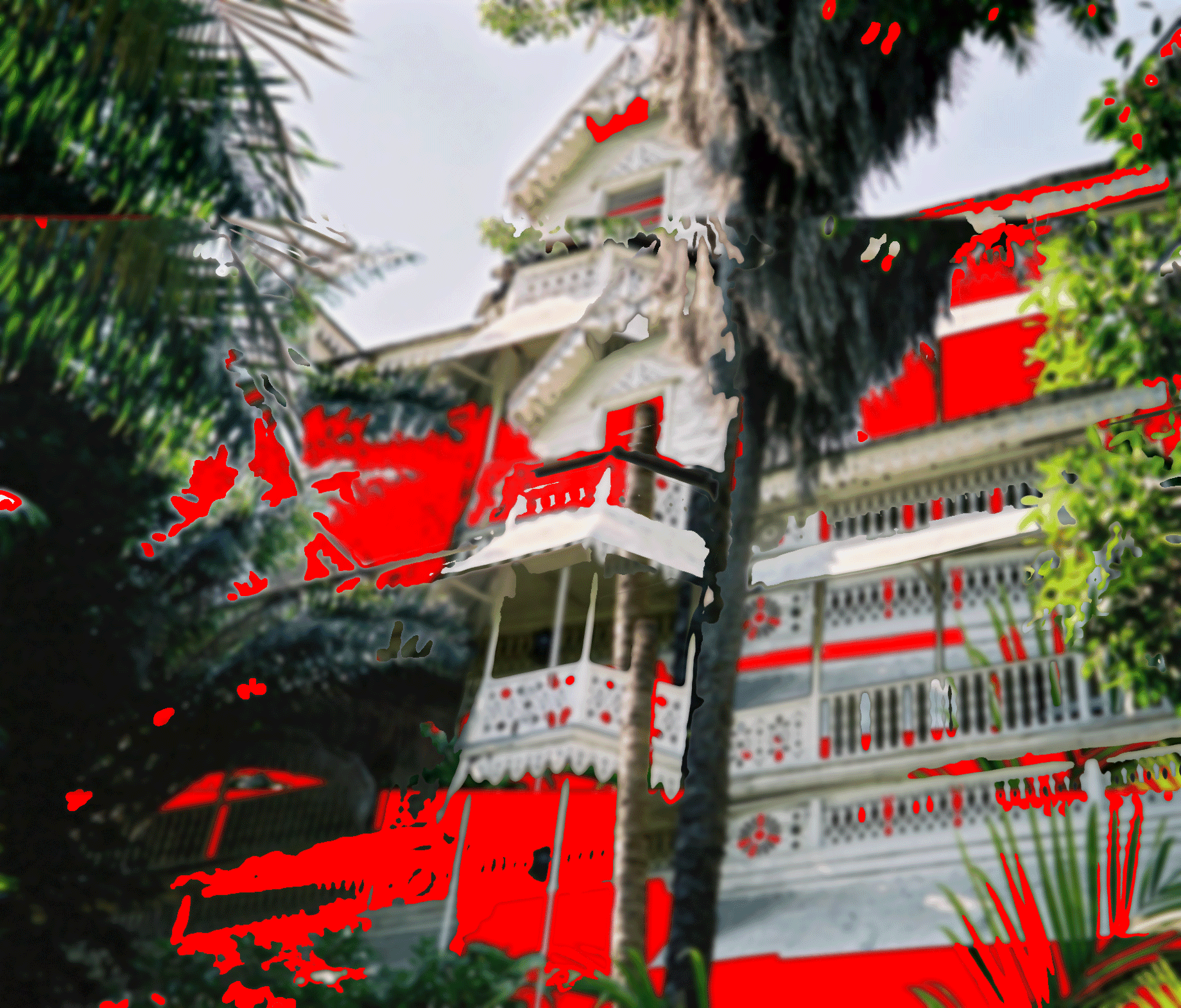

Haiti enters its 222nd year of independence under conditions that echo a long history of repression. As we celebrate this January 1st, the events of 2025 come into sharper focus. 5 months ago, while fireworks lit up American skies over the weekend of July 4, a more menacing blaze lit up Haiti’s capital, reducing the famed Oloffson Hotel to ashes. Like many homes and businesses in Port-au-Prince and other parts of the country, the hotel was abandoned as elite-backed paramilitary forces escalated their violent tactics.
Since then, outlets across the globe have dedicated space covering the destruction of the hotel and what it means for a country that continues to lose ground to gangs who appear to be fueled by the very mayhem they're driving. This attention may seem random, even suspicious to some, but to understand it, we must understand the very symbolism of the Oloffson.
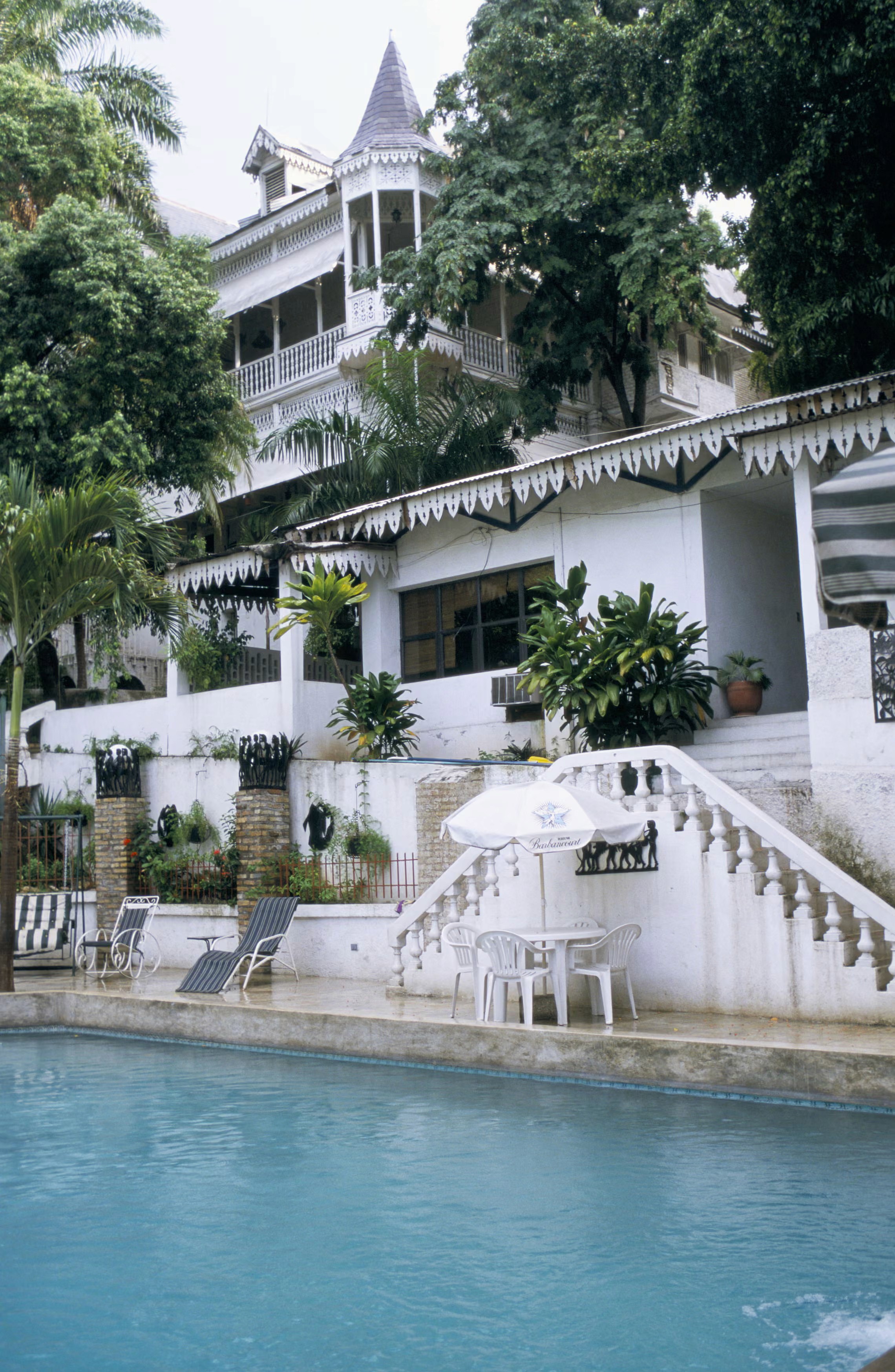
Photograph Jenny Matthews Alamy
In a nutshell, the Oloffson was the embodiment of the saying, “if these walls could talk,” standing as a silent witness to Haiti’s political, social, and artistic history.
To Haitians, the hotel is a source of architectural pride: a standing example of the gingerbread houses from the turn of the last century. It is the home of RAM, a significant Rasin band led by Richard and Lunise Morse, who is known for reimagining Vodou hymns as modern-day political statements. Oloffson was a spiritual home for adherents of Vodou, and a safe haven for the country’s LGBTQ population.
For Westerners, it was a mythical building, thanks to its characterization in Graham Greene’s novel and visits from icons like Elizabeth Taylor and Marlon Brando.
Standing since 1887, the hotel has served as an unofficial national archive, surviving the American occupation, the Duvalier regime, coup d’états, an earthquake, and cholera, only to fall at the hands of gangs birthed from the very soil it stands on.

Kenneth E. Harker: 1998 Haïti World Vision
Extremist erasure, such as this, is excruciating, but in the larger context, it is, unfortunately, unsurprising. Not-so-distant events in the Middle East serve as harsh examples of how domestic groups hellbent on domination use such tactics to gain an upper hand over the greater population.
Considered “a local offshoot of Al Qaeda,” the Islamic State, also known as ISIS, went on a quest to either destroy or sell prized Syrian and Iraqi artifacts. NPR reported that, “during its 10-month occupation of Palmyra, the Islamic State razed two ancient temples and a triumphal arc.” Members of the group also “...beheaded…the archaeologist who had been Palmyra’s antiquities custodian, because he refused to reveal the location of artifacts he had hidden.”
Experts like Yale University’s Eckhart Frahm believed this tactic was a way for ISIS to eradicate the sites as they were previously used by political leaders to “build some kind of national identity across religions, sects and ethnic groups.”
In such an explanation, we can find some understanding of the destruction of the Oloffson. On Thursday nights, fueled by RAM’s performances, the institution served as a rare zone of equity, as free of class and socioeconomic structures as you could find in Port-au-Prince. Together, natif natals, dyasporas, nèg anba yo and the elite— along with a random ambassador or foreign journalist—could co-exist in the same space with little to no hierarchy.
For the gangs to impose a new order, a new identity upon Haiti, structures representing any kind of unity could not exist. Such actions fall in line with previous tactics where they have kidnapped beloved leaders, targeted seminaries, and schools. These are the very institutions that serve as community pillars, and with the right resources and organizing, could withstand and even push back against the influence of the gangs.
It is critical to remember that, as apolitical as such pillars appear, they are not neutral. They are, in fact, battlegrounds where their first blows are thrown to weaken a people and their society.
It is critical to remember that, as apolitical as such pillars may appear, they are not neutral. They are, in fact, battlegrounds where their first blows are thrown to weaken a people and their society. During Argentina’s “Dirty War,” the military junta would regularly target universities and religious leaders as a way to weaken and trample on spaces that fostered intellectual curiosity, hope, and the nation’s collective memory as to what it meant to be Argentinian.
Furthermore, when we look at the children and young adults who make up these gangs, we can understand why a hotel would be insignificant to them. Most of these groups originated out of the poorest neighborhoods in the country, and now reports claim they are actively recruiting children from these very communities to join their ranks.
What does a Liz Taylor-blessed hotel mean to the 15-year-old who had to stop going to school at 12 because his mother couldn’t afford the fees? What does a RAM party mean to the 22-year-old who has never known what it means to enjoy three square meals a day, never mind a mindless night of dancing?
While these are sobering thoughts to have, we must grapple with how the country’s extreme gap between the have-nots and the haves has manifested into these cannibalistic moments.
So many ghosts haunt Haiti, and with the fall of the Oloffsson comes the birth of a new phantom. This is not a phantom born of legend and active imaginations, but rather, one of fear and forced forgetting.
There is no hopeful quip to end this piece. No reflection to offer solace to those pained by the ongoing events. There is just this moment and the never-ending cycle of grief we find ourselves looped in.


" height="102.5816409423233px" id="g2kZUfxvI" width="102.91800162469531px"/></svg>)
" height="103px" id="oG538LvCh" width="102.99817255782794px"/></svg>)
" height="103px" id="SKAc1JCfN" transform="translate(1.11 0)" width="100.78524425744274px"/></svg>)