
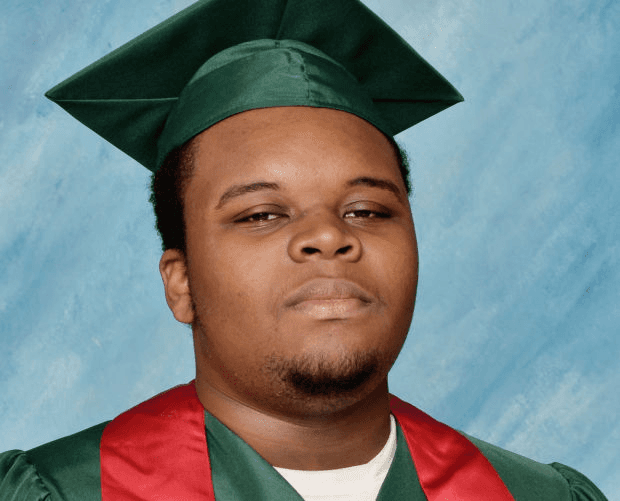

Can we truly call ourselves the children of Dessalines if we remain silent in such cases of injustice?
Michael Brown’s death has haunted me since I learned of its details as they emerged that tragic August afternoon. With three brothers and two nephews, I immediately thought of their futures, how due to their skin they’d be considered subhuman instead of the sweet young boys my family has reared them to be. Being a first generation Haitian-American, I’ve grown up knowing that the Black struggle in America is a perilous one with no end in sight. I have grown to understand that mainstream society will draw conclusions about me before I open my mouth because my skin is dark and my features are phenotypically African.
But this is not a notion understood or accepted by many in the Haitian community across generational lines. And it’s not our fault. We have had to live with the negativity of the immigrant experience in both white and Black America. To the whites we are boat people from the “poorest country in the Western hemisphere”, we are “survivors” of coup d’etat after coup d’etat, and the stars of natural disaster porn for cable news channels. To the Black Americans we are dirty, we stink, we talk funny. If you lived in the U.S. in the 90s, Haitians were considered the origin of the AIDS epidemic. We were never truly welcomed anywhere and learned to be a world unto ourselves in the U.S., building communities in Philadelphia, New York, Boston, and Florida, keeping to ourselves striving for kids to be better, striving to purchase homes in the suburbs that would prove to everyone back home that the American dream could also be ours.
Yet the enclaves we built in the 80s and 90s are slowly being opened by our children. Hip hop, cable television, friends, and the surrounding culture have forced assimilation upon us whether we wished for it or not. I look at my 17 year old brother and he is a world of difference from our father and grandfather - he doesn’t speak Kreyol (though we’ve tried), video games are his pastime, and sweats, sneakers and hoodies are his code of dress. Just as Trayvon was marked as a target for George Zimmerman in Florida because of his hoodie, my brother could be the same for a racist cop in New York. Haitians can no longer give into the mindset that says we’ll be better off with the powers-that-be than our American counterparts. A racist cop will not ask my brother or nephews to say their names or where their family is from before attacking, and then simply give them a friendly tap on the shoulder and walk away upon hearing them utter “Jean-Charles,” “Ulysse,” and “Haiti.”
Haitians are a proud people and we have every right to be. Our history even up to the present day is one of Black pride, strong cultural identity and survival in every sense of the word. Though there are times when this pride has not been quite as beneficial as we’d like it to be. I was in college when I first came across the work of Malcolm Gladwell. It was an article from the New Yorker in which I was introduced to the phenomenon that is “good Blacks” vs. “bad Blacks”. In the article, Gladwell described how, due to our foreignness, Caribbean immigrants in North America (he was speaking from a Canadian standpoint) are perceived to be “good” Blacks to whites. Due to immigration patterns, many Caribbean immigrants to the U.S. and Canada tended to come from well-to-do families that were able to see to their education and their voyage to a new country. Encountering their new nation’s social classes and racist structures, these very people who were used to being middle to upper class on their home islands now had to live and work in lower-income/working class communities. Within this context due to their differences in education and culture Caribbean immigrants would be held to a higher standard than Black Americans.
It is a hierarchy built on racist, ignorant and classist ideals but we must face the fact that there are many in our community who have bought into them. I am sure that many of you who are reading this article remember a time in your childhood where your parents and other elders scolded and warned you sternly to not be like “those Black Americans”. And it is because of this shameful mentality that there are those among us who are not shook up by Mike Brown’s death, because to them it is a Black American boy who has died - not one of our own. Yet, history will show our “otherness” has not protected from racism’s barbarity when it comes to inflicting cruel and torturous acts upon Black bodies. In 1997, Abner Louima was taken into police custody in New York where he was raped and physically tortured by members of the NYPD. Following his attack, the Haitian community took to the streets and marched until the Brooklyn Bridge shook, but the message was already out - we were not safe. In 2000, Patrick Dorismond was shot and killed by an undercover NYPD officer. A grand jury failed to indict his killer - just like in Mike Brown’s case.
I am sure there are examples of other cases, but these two make my point. We must wake up and realize that as long as we are Black in America, racism will color and mar our lives. We cannot see our cultural differences as reason enough to remain silent when Black boys who do not share our lineage are gunned down in acts of cowardice by racists. Our boys and girls are growing up in this country - we are doing them a grave disservice to keep our outrage for when they are targeted. Can we truly call ourselves the children of Dessalines if we remain silent in such cases of injustice?
A link to the Gladwell piece mentioned in this article
A link to Gladwell reading about the concepts of "Good Black, Bad Blacks" on NPR's This American Life
" height="102.5816409423233px" id="g2kZUfxvI" width="102.91800162469531px"/></svg>)
" height="103px" id="oG538LvCh" width="102.99817255782794px"/></svg>)
" height="103px" id="SKAc1JCfN" transform="translate(1.11 0)" width="100.78524425744274px"/></svg>)